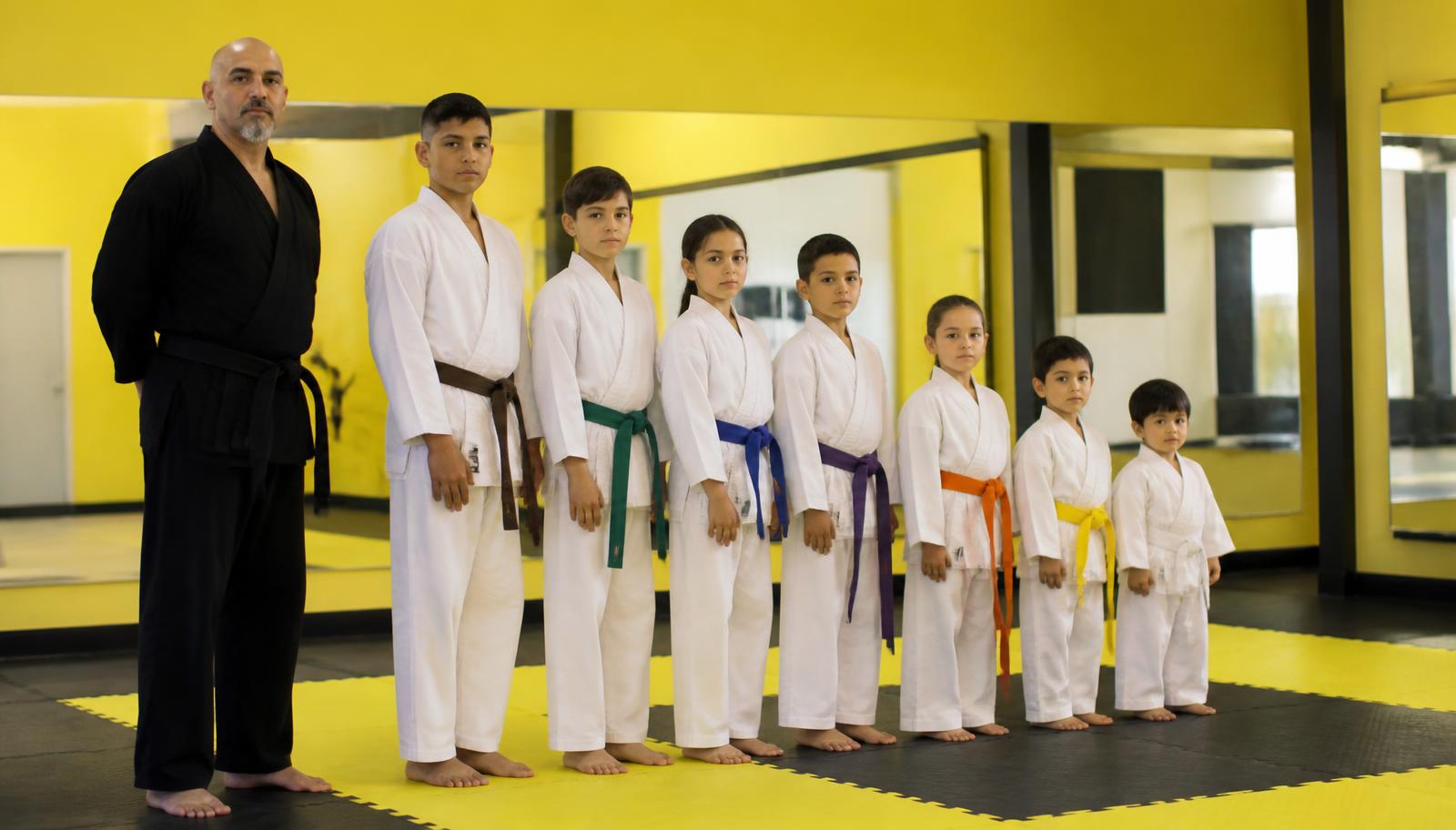
The program, explained properly
What is SKILLZ?
Every martial arts school says its kids' program is "age-appropriate." Almost none of them will tell you what that means. Here is exactly what it means at Pride, level by level, skill by skill — so you can decide for yourself.
Start here
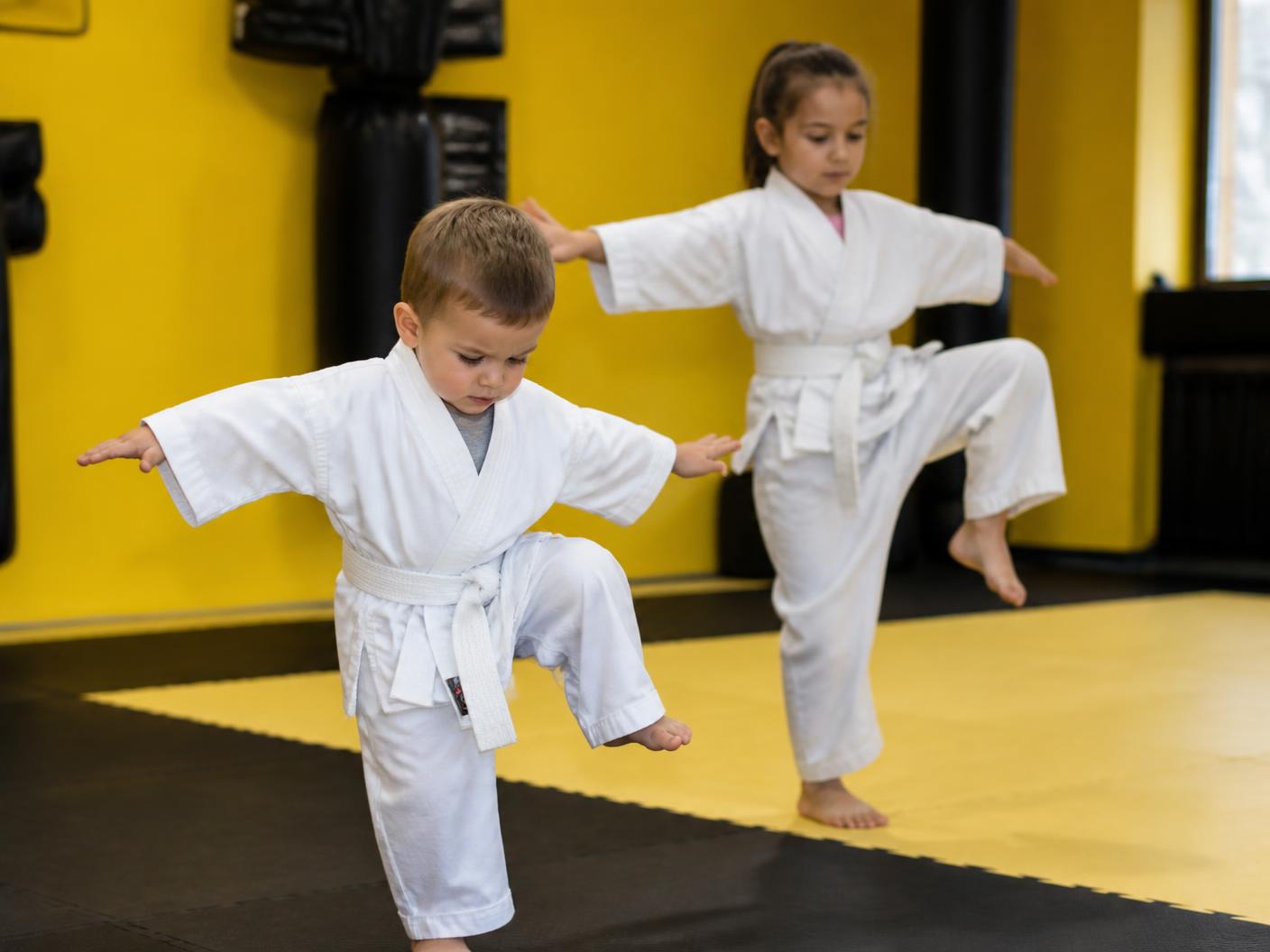
Ask a five-year-old to stand on one leg with both arms out, making circles.
Most of them will have it inside a minute. Wobbly, but they'll get there.
Now ask a three-year-old the same thing. It isn't that they need more practice, or that they aren't trying hard enough, or that they need to focus. The wiring that lets a body hold one balance task while the arms run a second, different task is still being built. You are asking for something the hardware cannot do yet.
That is the entire premise of SKILLZ. Not "kids learn at different speeds" — children at different ages are running fundamentally different equipment, and the class has to be built for the equipment in the room.
So what happens to the three-year-old in a class of six-year-olds? They don't learn slower. They spend forty-five minutes failing at things they were never capable of, in front of kids who can do them. Then they decide they're bad at it. That conclusion is a lot harder to undo than a missed kick.
The other direction is just as bad. Put a nine-year-old in with five-year-olds and they are bored inside three weeks — and a bored nine-year-old is a nine-year-old who quits.
How the levels are designed
Four questions, asked at every age
Before a single technique gets picked for a level, the curriculum asks the same four questions about that age group. The answers are what decides what gets taught.
Physical
Strength, coordination, and motor control — what the body can currently do.
Intellectual
Memory, command retention, and problem-solving — how much instruction can be held at once.
Emotional
Self-control, perseverance, and handling frustration — what happens when it stops being fun.
Social
Teamwork, turn-taking, and sportsmanship — how they operate in a room full of other kids.
For each one, the curriculum states plainly what is normal for the age, what the instructor should expect to see struggle in week one, and what the level is driving toward. You'll find all of it on each program page below — nothing hidden.
Find their room
How old is your child?
Pick an age and we'll show you exactly which of the four levels they belong in and what they'd be working on.
The four levels
Eight skills per level. Named, taught, and tested.
Each level has exactly eight skills, chosen for what that age is developmentally primed to build. One skill per class, in order. Here they are — all thirty-two, in the open.
Early SKILLZ
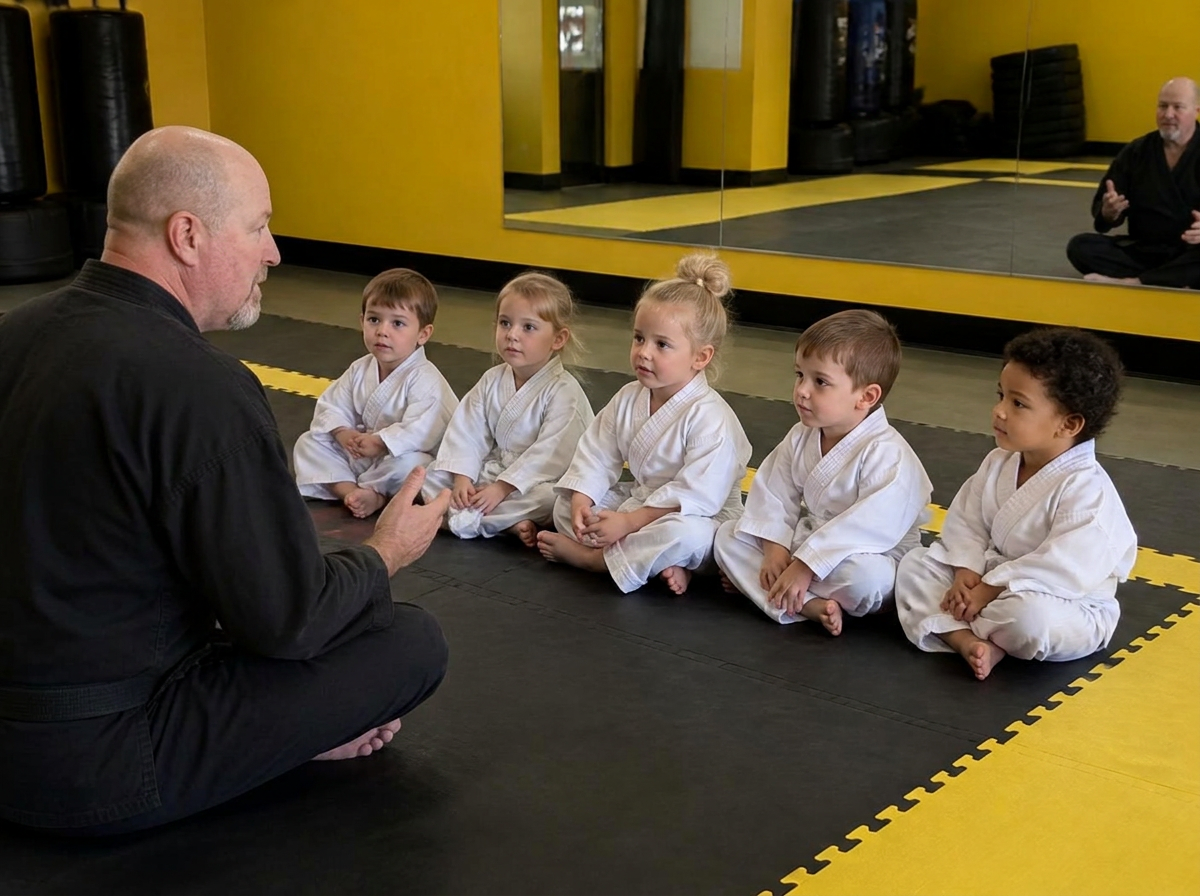
Ages 3–4The eight movements a body has to own before it can learn anything else.
Basic SKILLZ
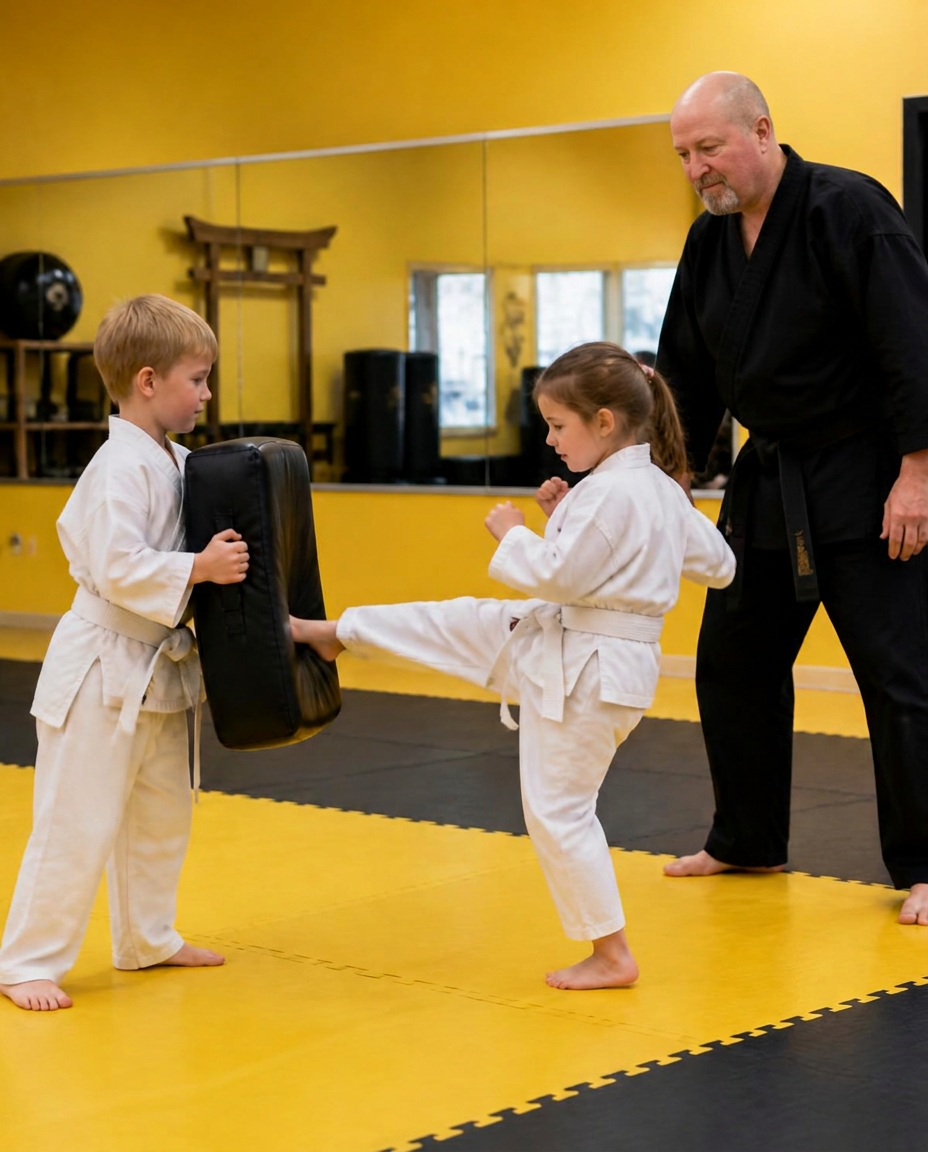
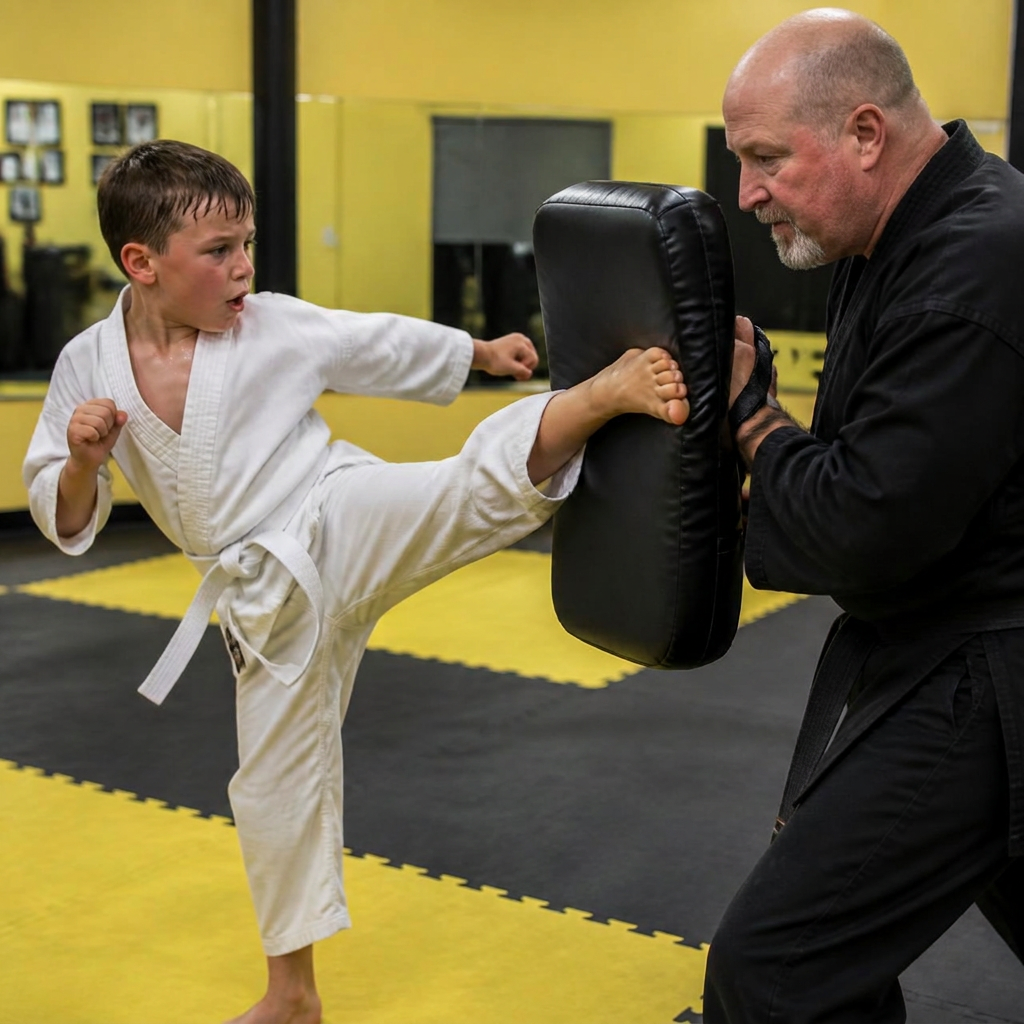
Ages 5–6The age where character becomes teachable — and the eight traits we teach.
Core SKILLZ
Ages 7–9The golden age — athletic skill and grit, built at the same time.
Extreme SKILLZ
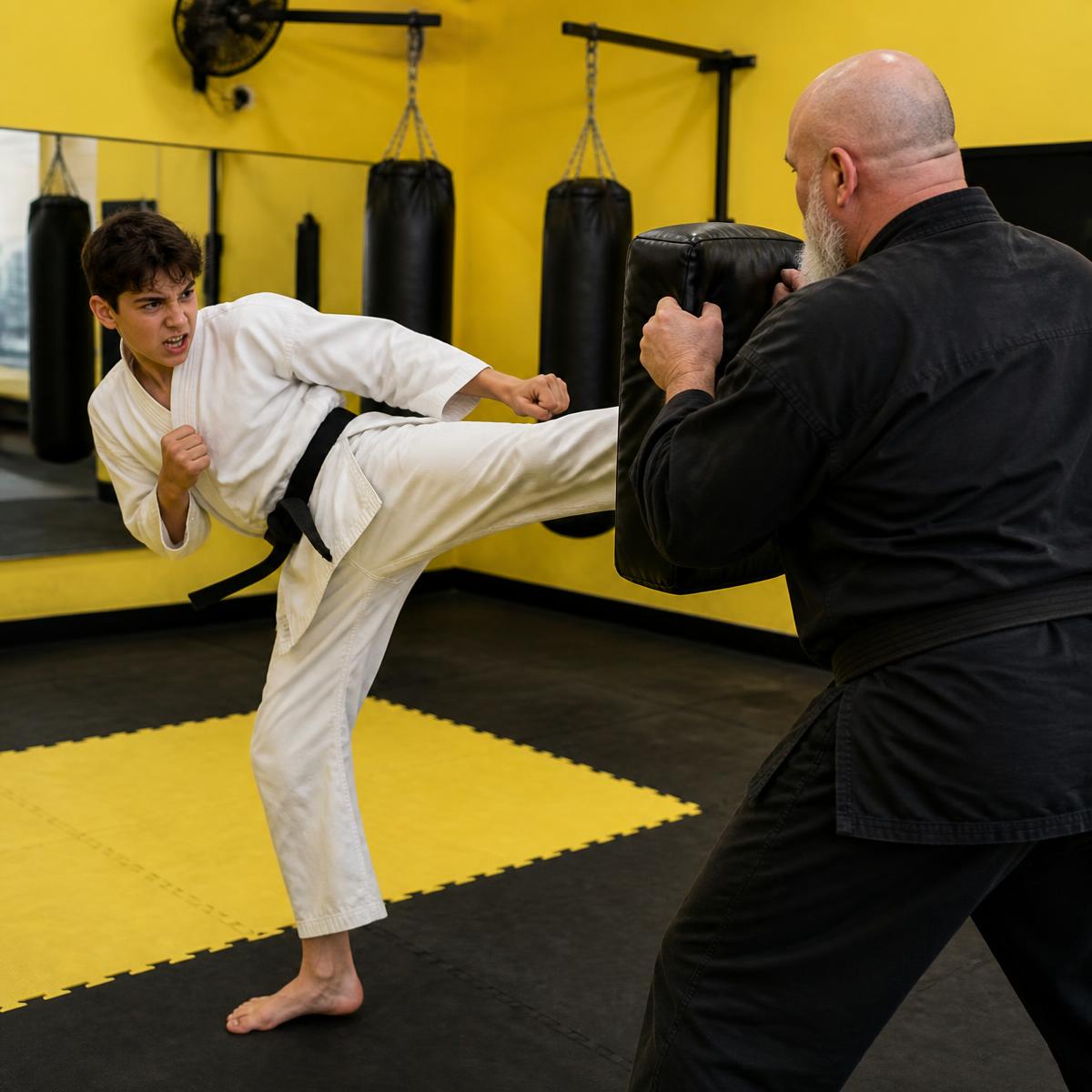
Ages 10–14The smartest students in the building. The problem was never ability.
Anatomy of a class
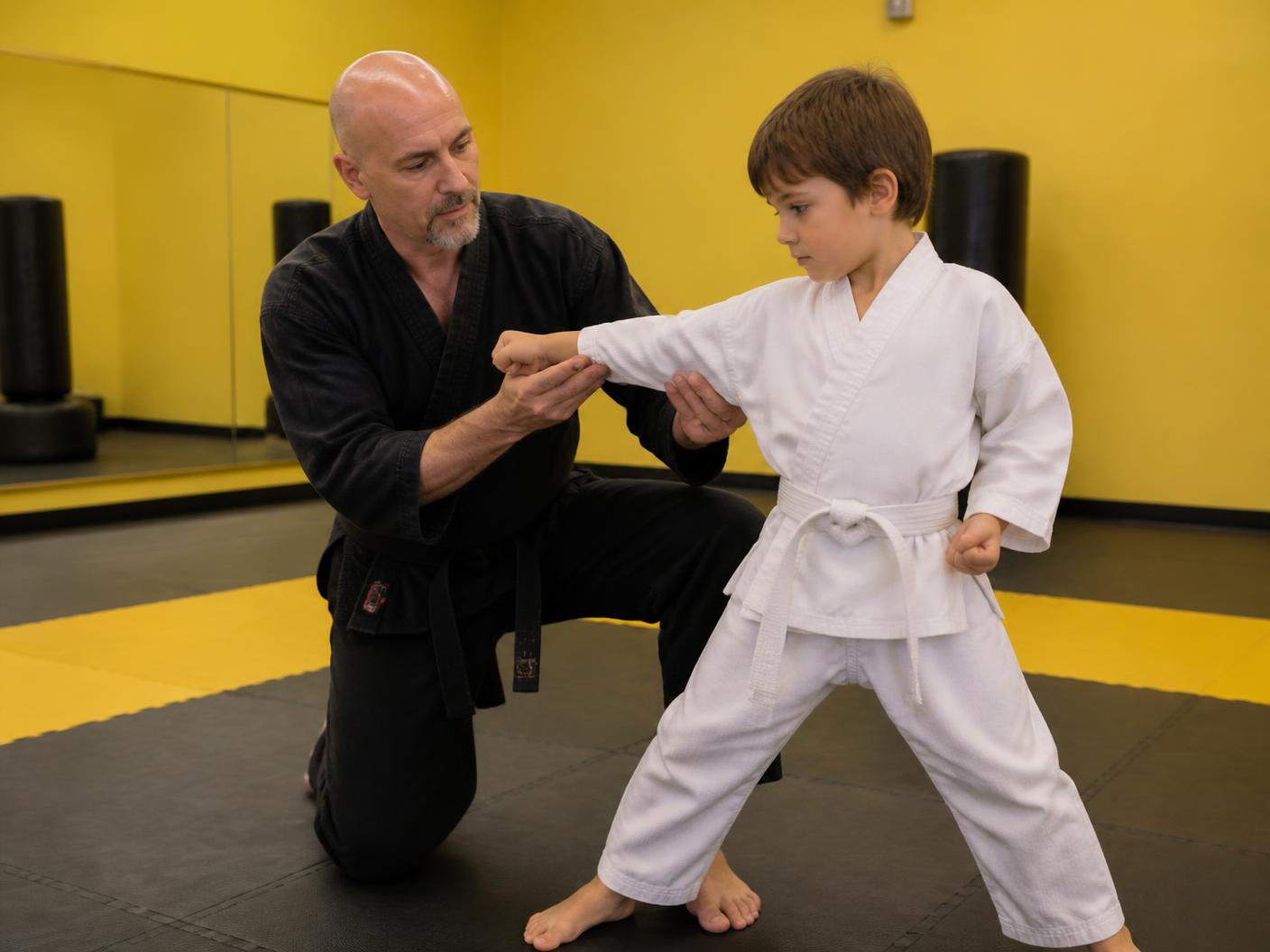
The same four parts, every single class
This structure does not vary by level or by instructor. It varies only in what the skill of the day is and how hard the standard is.
- 1
Warm-up
Bodies moving and blood flowing before anything technical is asked of them. Short, loud, and physical on purpose.
- 2
Mat chat
Everyone sits down and the instructor explains today's one skill — what it is, where it shows up outside the building, and what earning it will take. Two or three minutes. This is the part most schools skip and it is the part that makes the skill stick.
- 3
Skill-building drills
Two or three games engineered so that the only way to win the game is to perform the skill. Kids think they're playing. They are being drilled.
- 4
The test
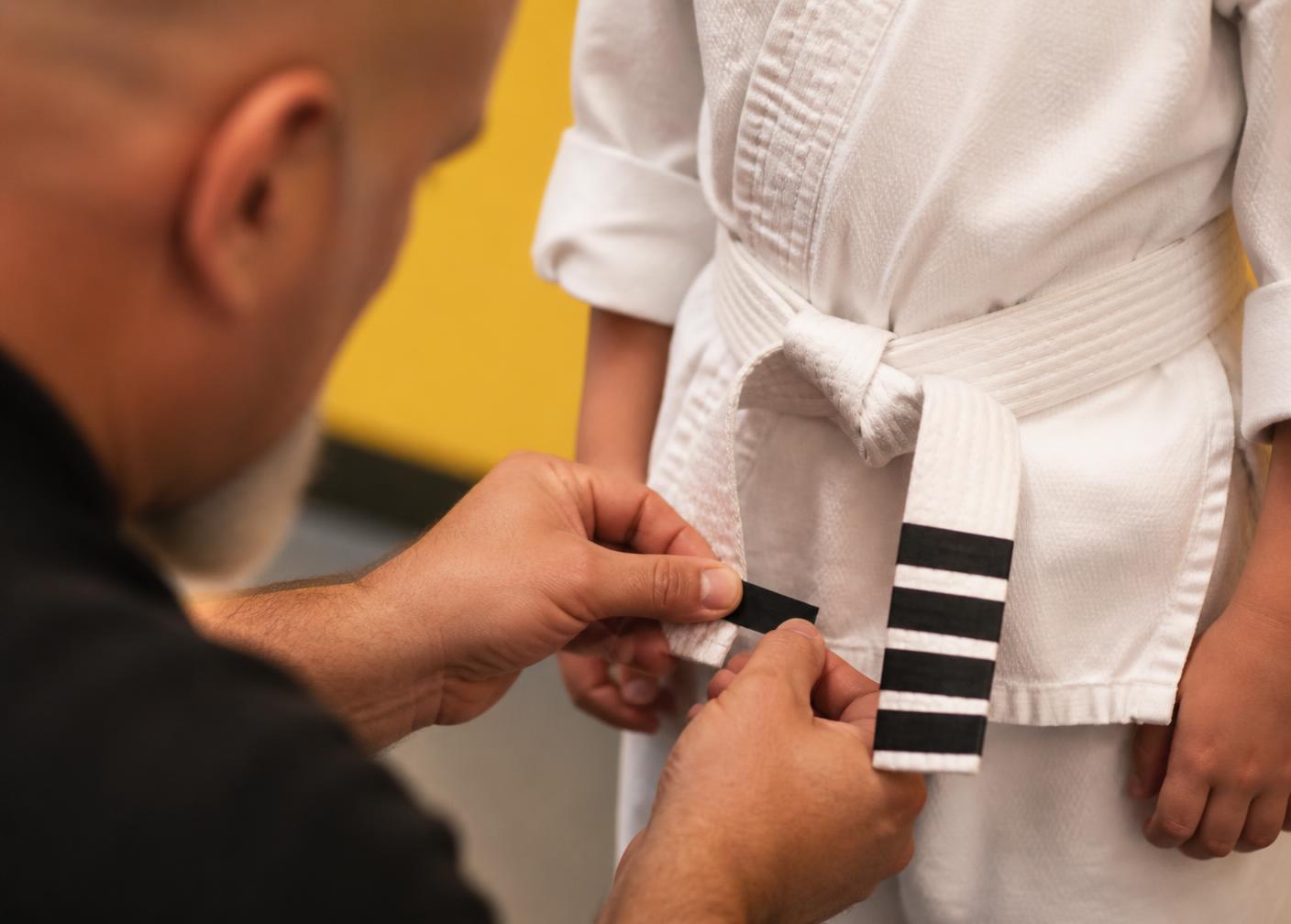
Each student demonstrates the skill individually. Meet the standard and the stripe goes on the belt that day. Miss it and they try again next cycle — nothing is handed out.
How progress is measured
72 stripes per level.
Every one of them earned in front of you.
Eight skills. One per class, in order. Earn all eight stripes and your child tests for the next belt. Nine belts completes the level and moves them up to the next age program — where all eight skills start again against a harder standard.
Most schools tell you their program builds confidence. Ask them to show you. Here you can watch your child's belt fill up, one stripe at a time, and you can name the skill each stripe stands for.
Straight answers
Things schools usually leave out
Is this actually martial arts, or is it a gym class with belts?
It's martial arts. The techniques are real and the standards are real. What's different is the order things are taught in and the language used to teach them. A five-year-old learning 'control' is learning to throttle their power on command — that is a martial arts skill, we've just given it a name they can hold onto.
My kid is nine but small for their age. Does age or ability decide the class?
Age decides the starting point, because the curriculum is built around developmental stage, not size. But we watch the first few classes and we'll tell you honestly if a different level fits better. We would rather move a child than leave them in the wrong room.
What if my child fails the skill test?
Then they don't get the stripe that day and they run the skill again next cycle. This is deliberate. A stripe that everyone gets is worth nothing, and kids know it faster than adults do.
Isn't a three-year age band still too wide?
Fair question, and it's the honest limitation of any school's schedule — you need enough kids to fill a class. Core SKILLZ covers seven to nine, which is a real spread. The curriculum handles it with nine belt ranks inside the level, so a seven-year-old and a nine-year-old are in the same room working the same skill at different standards. Narrower would be better. Three years, structured this way, is a long way ahead of a single 'kids class' for everyone from five to twelve.
Who developed this?
The SKILLZ curriculum was created by Melody Shuman — now Melody Johnson — who spent two decades in martial arts before building age-specific programs around child development stages rather than adapting adult syllabi downward. It is now run in over a thousand schools worldwide.
Come watch a class before you decide anything
Tell us your child's age and we'll put them in the right room. Sit and watch the whole thing. If it isn't the right fit, we'll say so first.