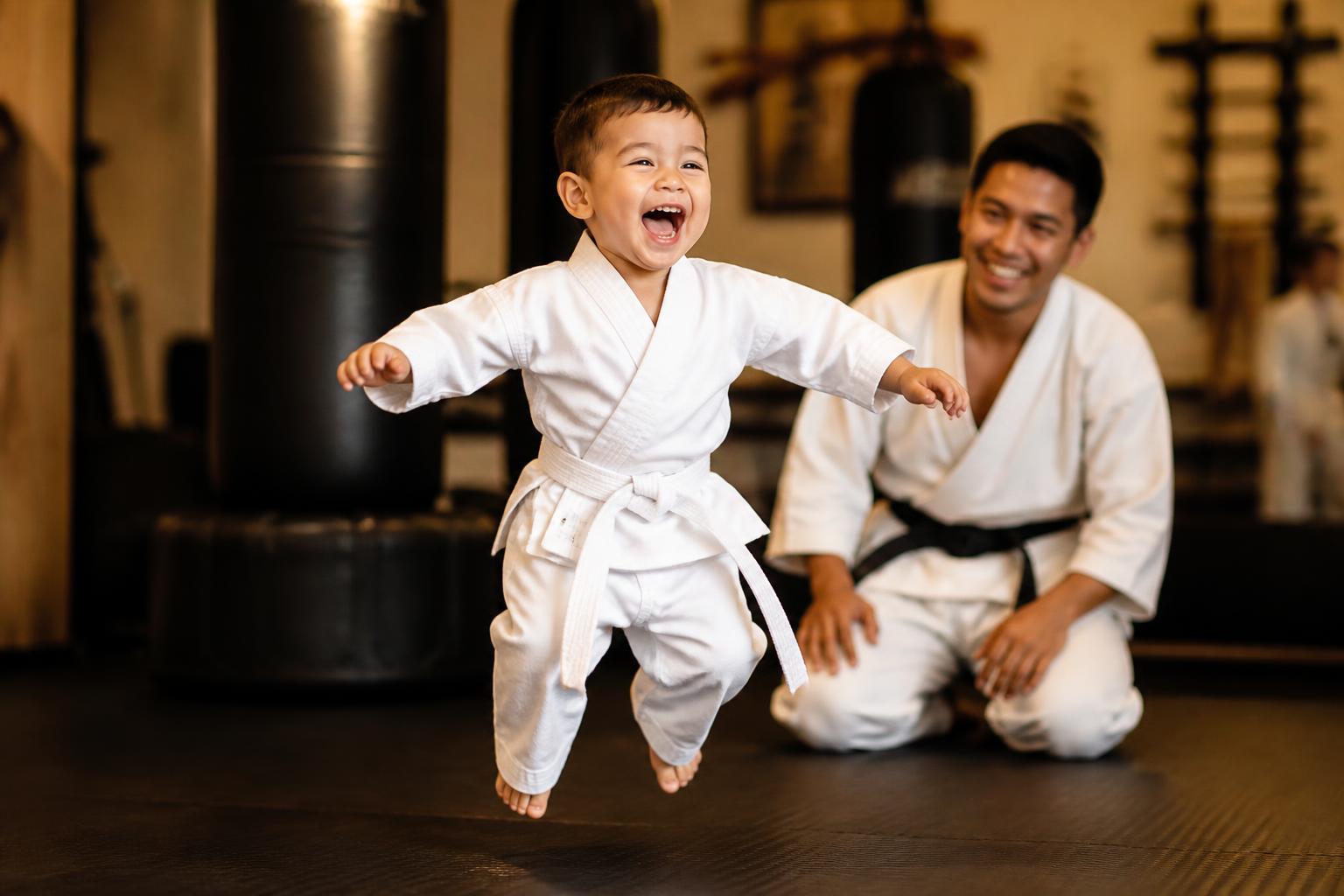
Three-Year-OldsDon't NeedA Watered-Down Class.
They need a different one. Early SKILLZ is 30 minutes built around the eight movements a three- and four-year-old body is actually ready to own — taught by instructors who expect a wandering eye and know exactly what to do with it.
Intro Special
Uniform included
2 Weeks of Classes
Early SKILLZ. Uniform included.
- 2 weeks of Early SKILLZ classes
- Uniform included ($69 Value)
- Right-fit check before you commit
- Sit and watch every class
Sound familiar?
You already know how this age goes.
- Three instructions in, they've forgotten the first one
- They melt down when it's someone else's turn
- Bedtime is a negotiation because the energy never got spent
- The last class you tried had them standing in a line, bored
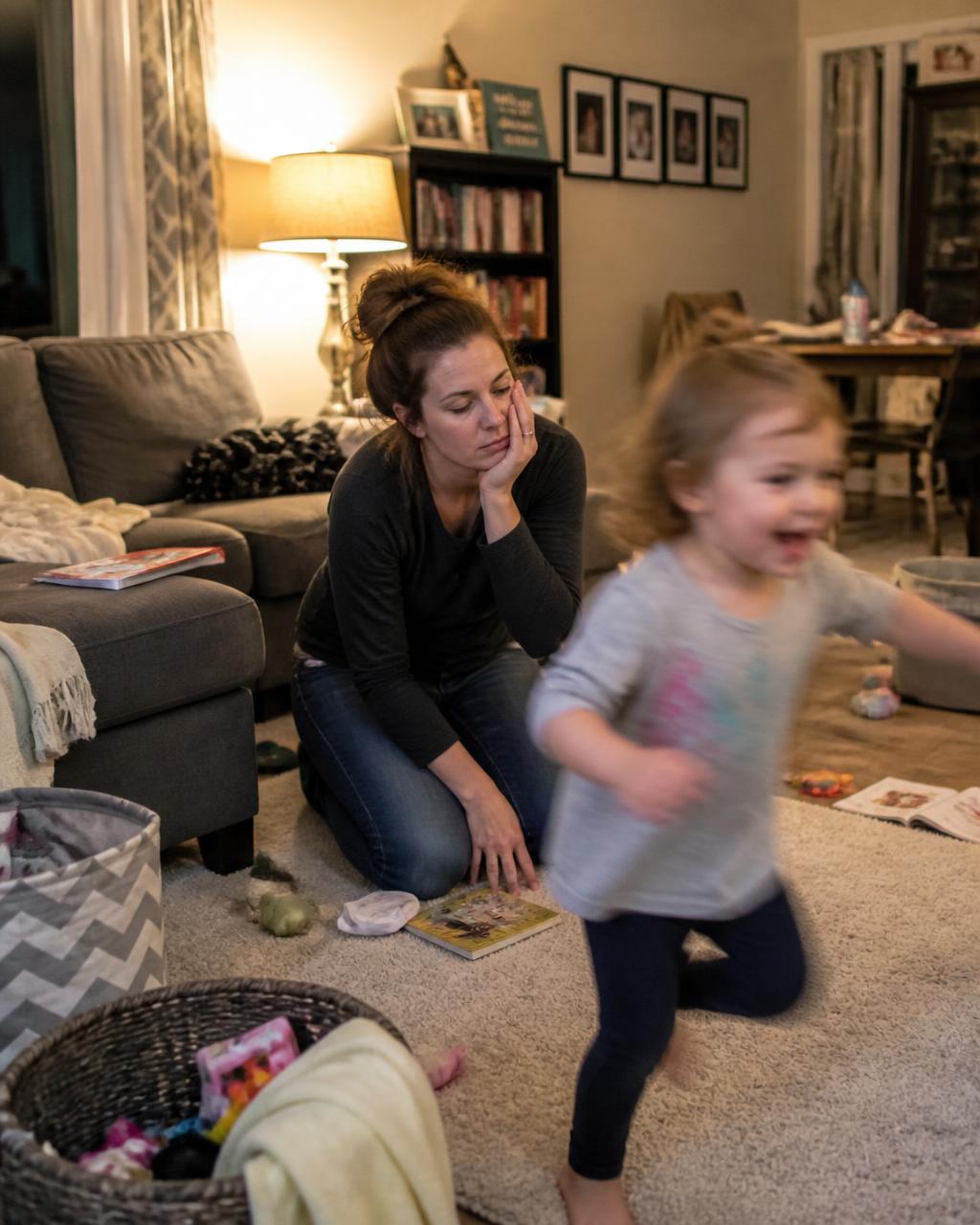
What parents notice instead:
- They wait their turn — and you see it at home first
- They can follow two-step directions without a reminder
- They hop, balance, and catch without falling over
- They walk in on their own and go straight to their spot
30 min
the honest ceiling for structure at this age — we end on a high note instead of grinding out an hour
Why ages 3–4 train separately
A three-year-old is still building the wiring for balance, and can hold about three instructions at once before the fourth one pushes the first one out. Put that child in a class of six-year-olds and they will not learn slower — they will learn nothing, because the class is running on hardware they have not built yet.
Designed for this age
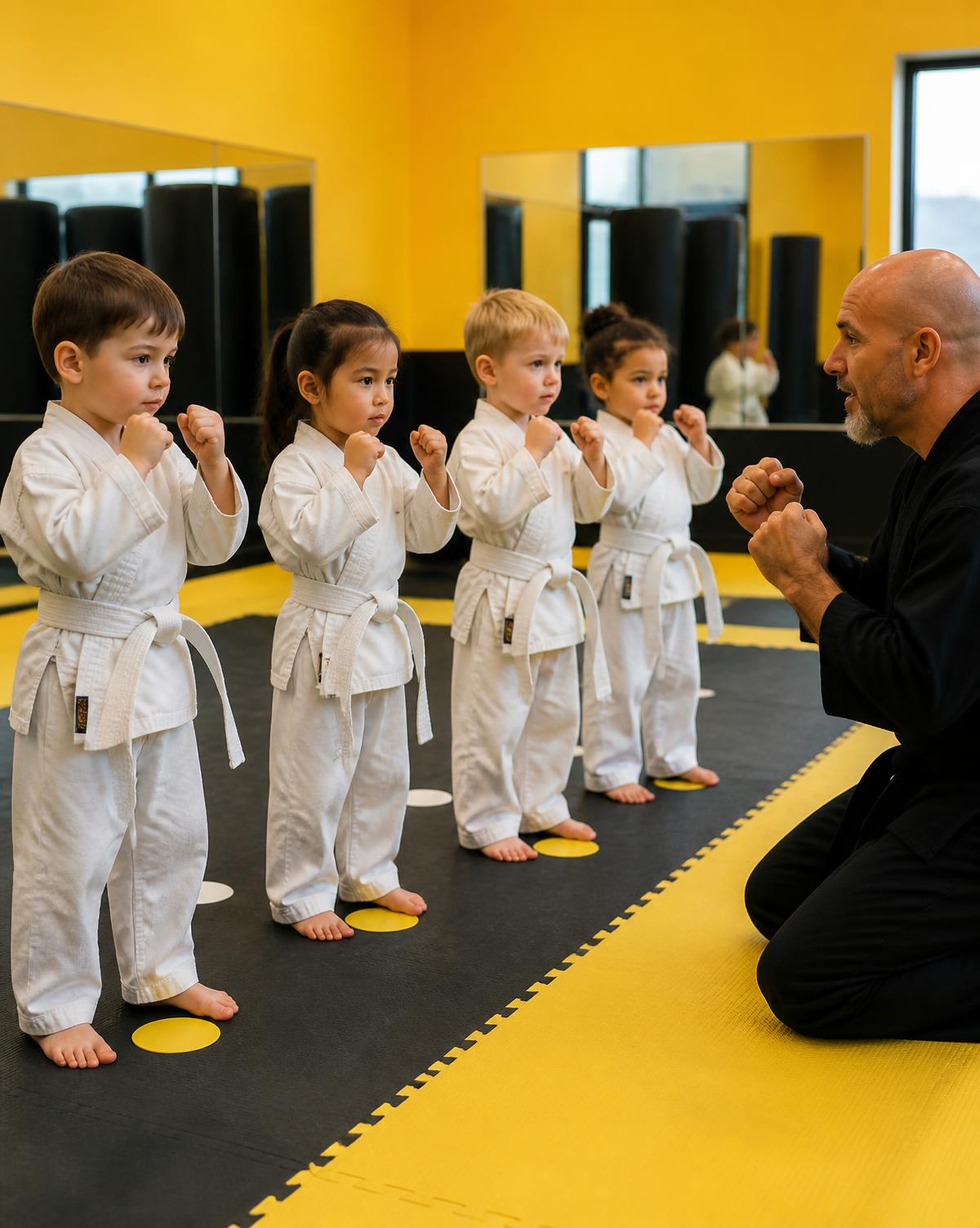
Teaching A Body How To Be A Body.
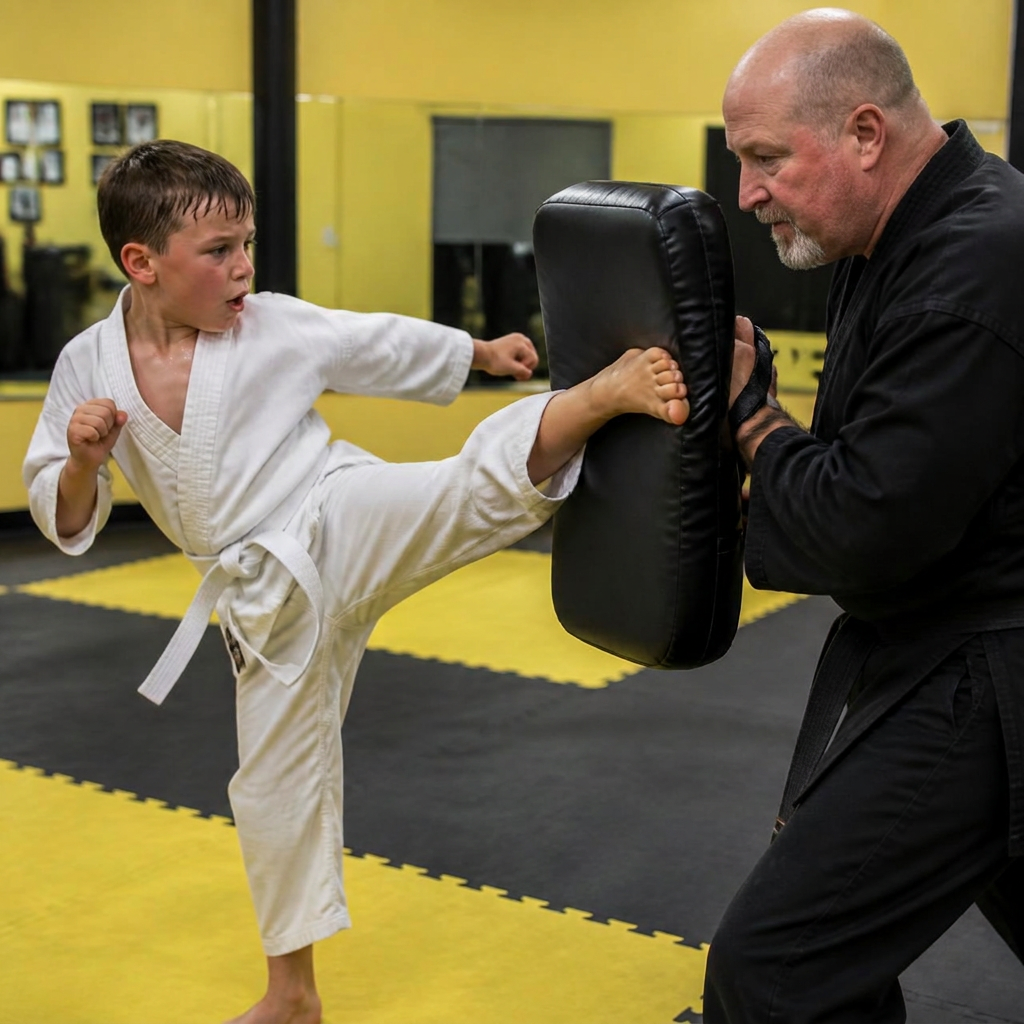
Kick, punch, block, crawl, hop, roll, run, catch. These eight motor patterns are the hardware everything else installs on top of. Skip them and a child spends the next four years faking stances they physically cannot hold.
Early SKILLZ is not a watered-down version of the big kids' class. It is a different curriculum with different goals, because a three-year-old and a six-year-old are not the same animal.
At this age we are not teaching martial arts so much as teaching a body how to be a body. Kicking, punching, blocking, crawling, hopping, rolling, running, catching — these eight are the raw motor patterns that everything else gets built on top of. A child who can't hop on one foot can't hold a fighting stance. A child who can't cross the midline can't throw a proper reverse punch.
Class is 30 minutes because that is roughly how long this age can hold structure before the wheels come off. We would rather end on a high note than grind out an hour and send home a kid who hates it.
Separation Without Tears
Parents watch from the seats, not the mat. Most kids stop looking back by week two — and that first solo class is a bigger milestone than any belt.
Built For A 3-Minute Attention Span
Nothing runs longer than the age can hold. Drills change fast, energy stays high, and no child stands in a line waiting to be bored.
Turn-Taking, On Purpose
Sharing a target pad is a social skill drill disguised as fun. This is where preschool behavior actually changes.
One Skill, One Class
Your child works one named skill per class and earns a stripe for it. No mystery about what they did today.
Zero Contact, Total Supervision
No sparring, no partner impact. Pads, targets, and coached drills only — every single class.
They Leave Wanting More
We would rather cut a class short at the peak than send home a kid who decided martial arts is boring.
Where ages 3–4 actually are
What we expect. What we're building toward.
No instructor at Pride is surprised by any of this. It is written into the curriculum before your child walks in the door.
Physical
- Normal at this age
- They don't yet know how to apply their muscles, so they fall a lot when their body is in constant motion.
- What week one looks like
- Sloppy technique. Losing the foot to the floor after four or five kicks.
- Our goal
- High kick counts without putting the foot down, and clean reps on static, active, and dynamic movement.
Intellectual
- Normal at this age
- Roughly three commands is the ceiling. Left and right are not yet reliably distinct.
- What week one looks like
- Visible confusion when asked to do more than three things in a row.
- Our goal
- Hold three-plus commands at once, and run left/right combinations correctly.
Emotional
- Normal at this age
- They focus on what makes them happy, and they have slow brakes when they're excited.
- What week one looks like
- Shutting down when something isn't fun. Running off the mat when anxious. Losing control when over-excited.
- Our goal
- Keep going when it's hard, and control their body and their power when they're wound up.
Social
- Normal at this age
- They love to play alongside other kids, but they are genuinely self-centered — that is age-appropriate, not rude.
- What week one looks like
- Copying a classmate who falls. Hitting or grabbing when frustrated, because vocabulary hasn't caught up to feeling.
- Our goal
- Spatial awareness, taking turns, and not interrupting when someone else is talking.
The curriculum
The eight Early skills
One per class, in this order. Your child earns a stripe for each. All eight, and they test for their next belt.
- 01
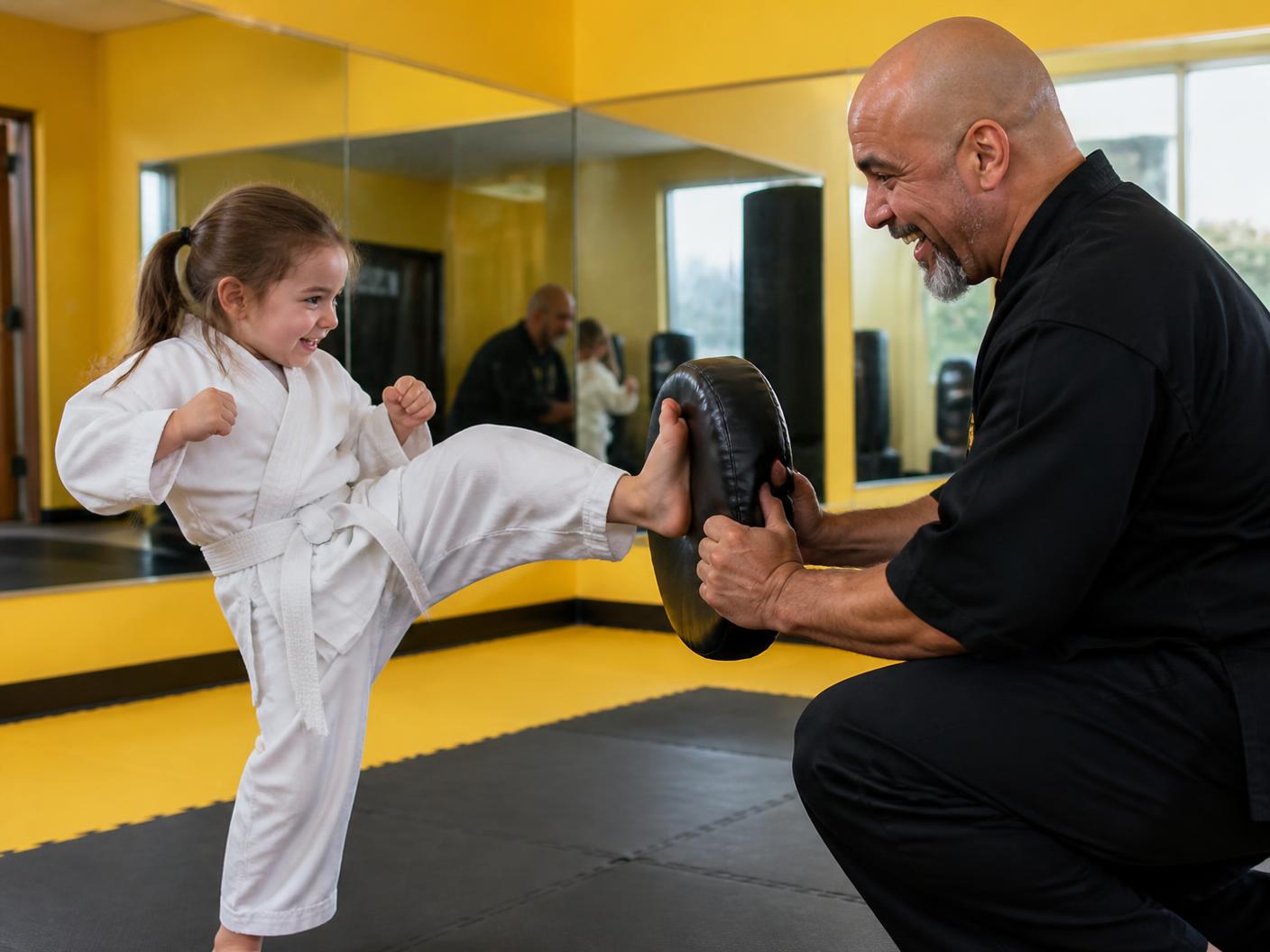
Kicking
Getting the knee up first and the foot back down under control — not swinging a leg and hoping.
- 02
Punching
One arm out, one arm back, hips involved. The first time most kids feel their whole body do one thing.
- 03
Blocking
Moving a limb to a target on purpose, on cue, before the pad arrives.
- 04
Crawling
Cross-body movement — left arm with right leg. This is the pattern that wires the two halves of the brain together.
- 05
Hopping
Single-leg takeoff and landing. The foundation of every balance skill that comes later.
- 06
Rolling
Learning to hit the ground on purpose so that falling by accident stops being frightening.
- 07
Running
Changing direction and stopping on command — not speed, control.
- 08
Catching
Tracking a moving object with the eyes and getting the hands there in time.
What a stripe test looks like
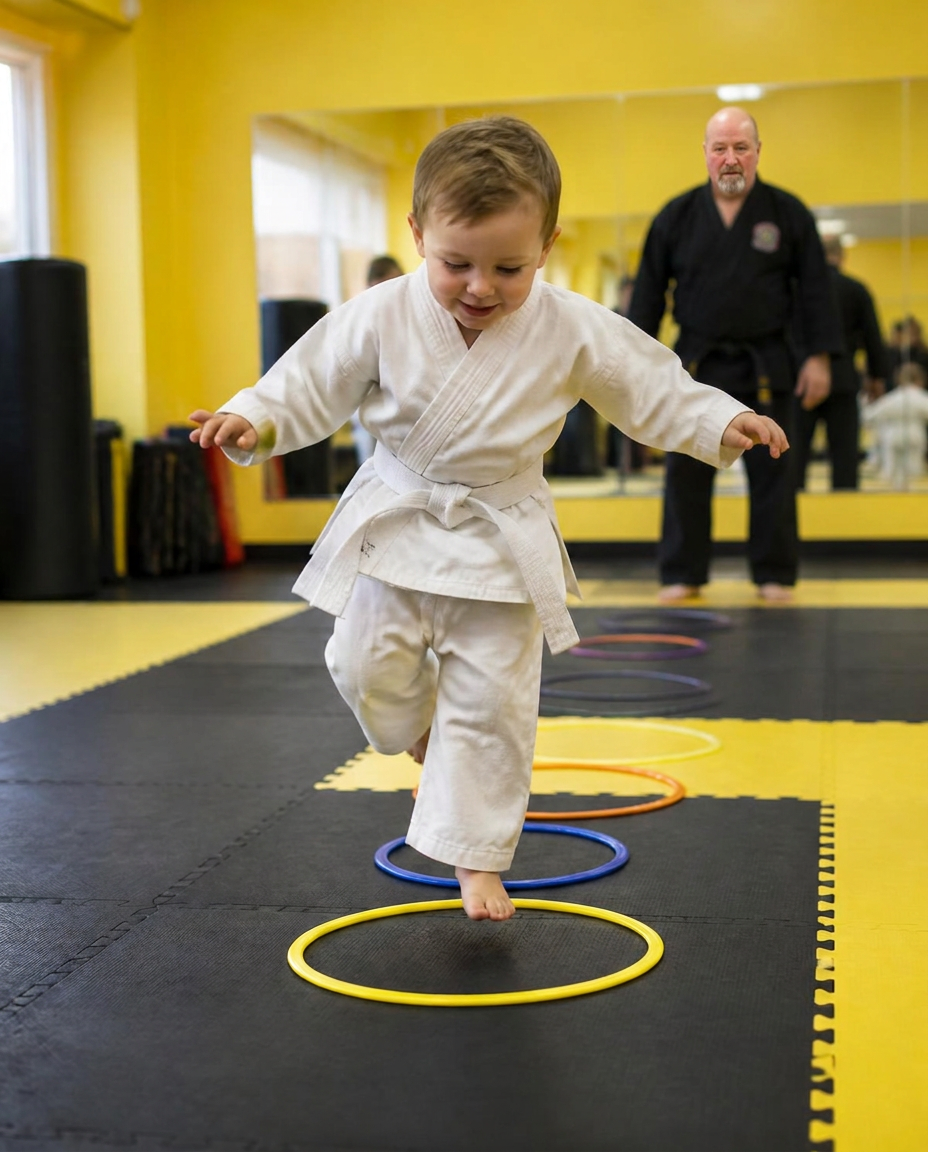
For the hopping stripe, a white belt hops from hoop to hoop across the mat without putting the second foot down, and lands in a stance at the end. Either they do it or they don't. There is no participation stripe.
30 minutes, four parts
Warm-up
Bodies moving and blood flowing before anything technical is asked of them. Short, loud, and physical on purpose.
Mat chat
Everyone sits down and the instructor explains today's one skill — what it is, where it shows up outside the building, and what earning it will take. Two or three minutes. This is the part most schools skip and it is the part that makes the skill stick.
Skill-building drills
Two or three games engineered so that the only way to win the game is to perform the skill. Kids think they're playing. They are being drilled.
The test
Each student demonstrates the skill individually. Meet the standard and the stripe goes on the belt that day. Miss it and they try again next cycle — nothing is handed out.
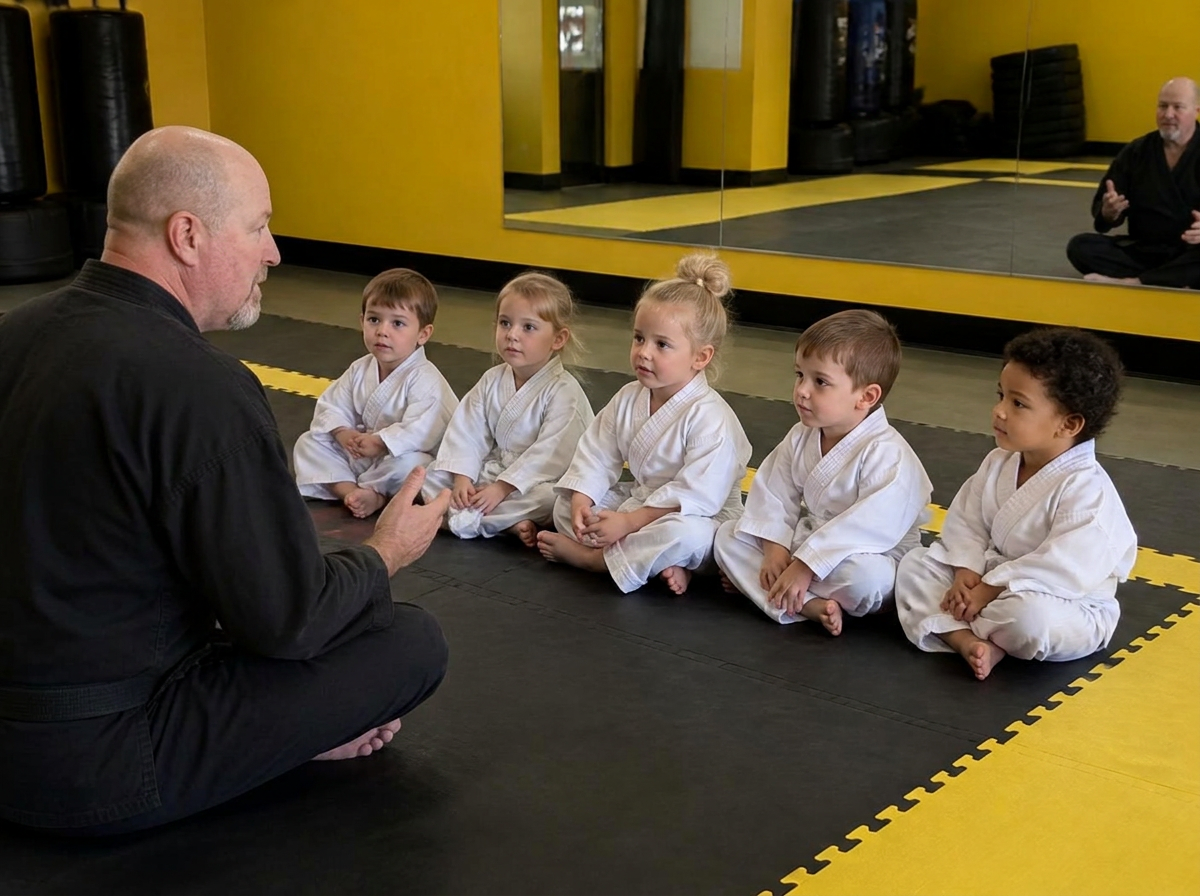
Small Groups
so no three-year-old disappears in the back row
Within the first few weeks
What parents notice first
They follow two-step directions the first time you ask
Bedtime gets shorter — the energy has somewhere to go
They can hop on one foot and hold a balance for a beat
They start showing you their skill in the kitchen, unprompted
The First Stripe Is The One They Remember.
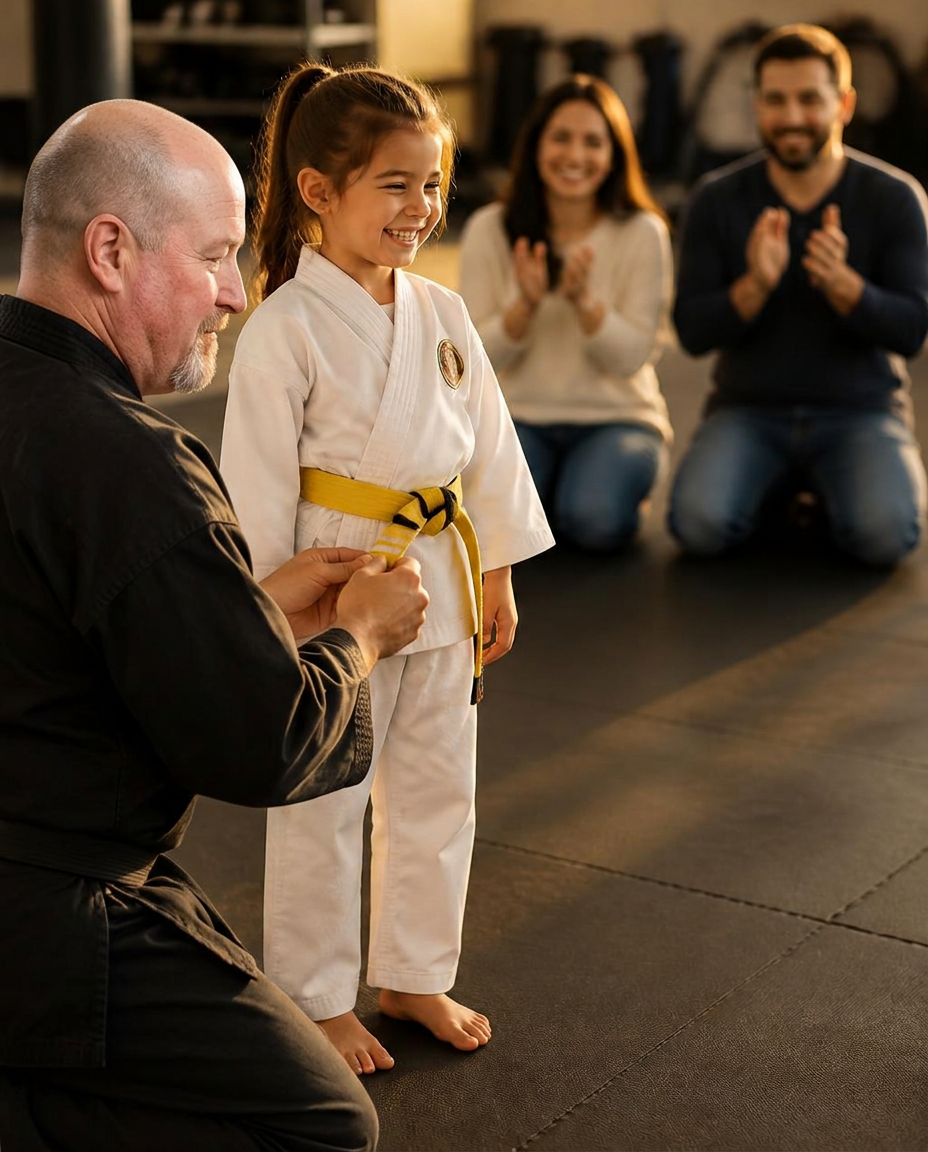
A three-year-old cannot picture a black belt. They can picture the stripe going on their belt in front of everyone — so that's what we build the whole class around.
Named, Not Vague
Not 'good job today.' They earned the balance stripe, and they can tell you which one it was.
Earned In Front Of You
Stripes are handed out on the mat, in front of the class and the parents' seats. That moment does the work.
A Reason To Come Back Tuesday
Eight skills, eight stripes, then a belt. The runway is visible even to a four-year-old.
How the level is built
8
named skills per belt — one per class, in teaching order
9
belts inside Early SKILLZ before they move up
72
stripes earned across the level
Finish all nine belts and your child moves up to Basic SKILLZ (Ages 5–6) — where eight new skills start against a harder standard.
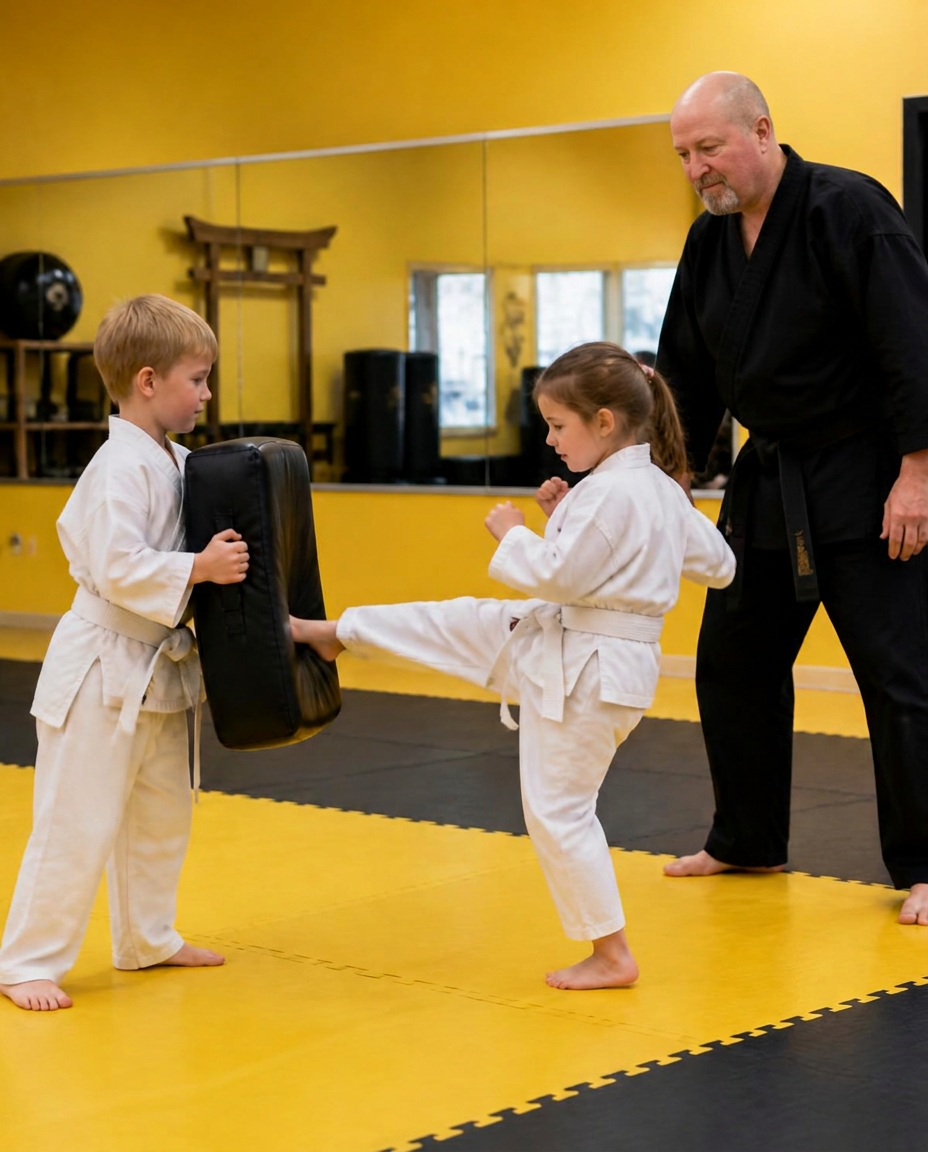
Give Them The Class
Built For Three.
Intro Special
Uniform included
2 Weeks of Classes
Early SKILLZ. Uniform included.
- 2 weeks of Early SKILLZ classes
- Uniform included ($69 Value)
- Right-fit check before you commit
- Sit and watch every class
Common questions
Ages 3–4 questions
Give Them The Class
Built For Three.
Two weeks of Early SKILLZ classes, uniform included. Sit and watch every one. If it isn't the right fit for your child, we'll tell you before you commit.