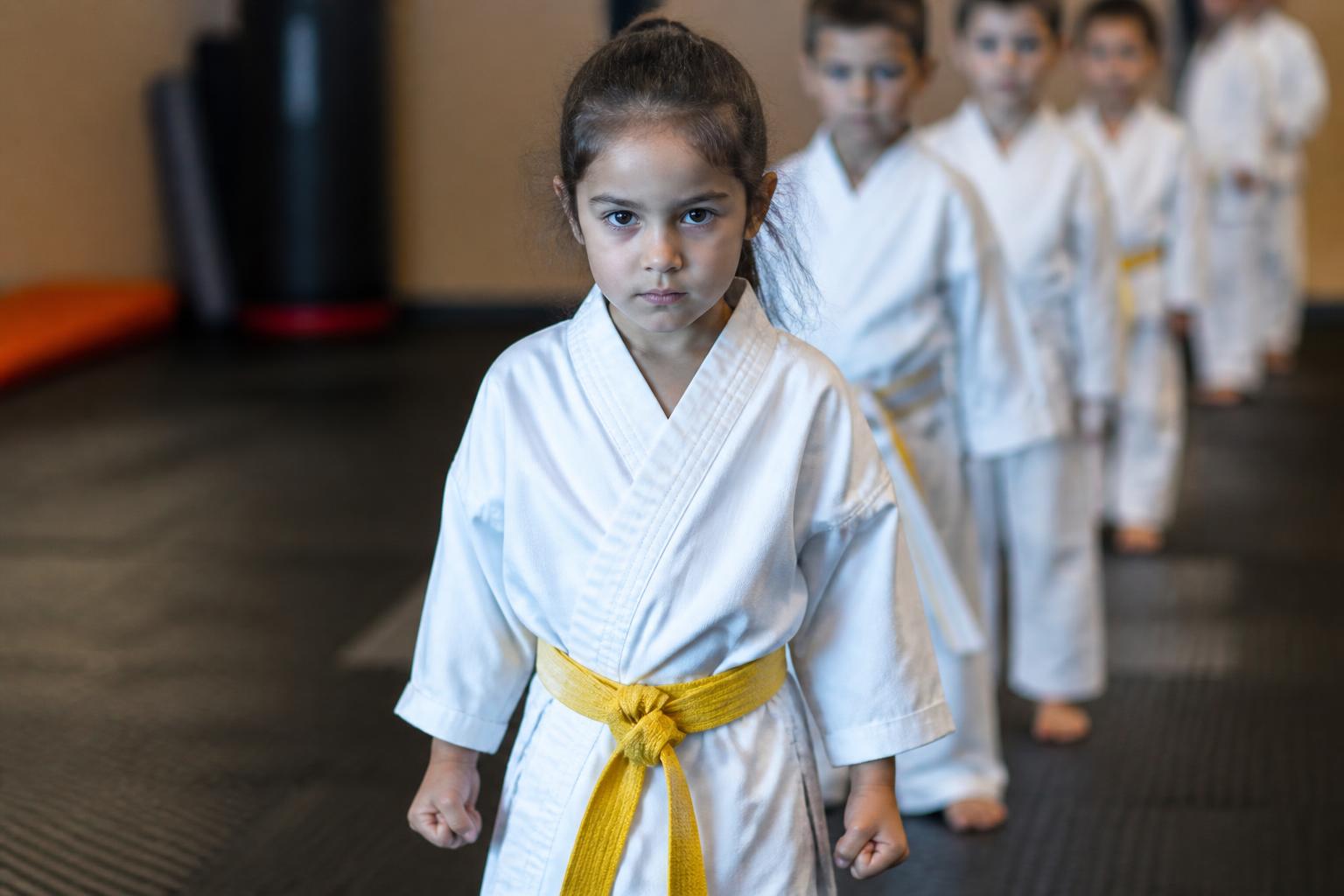
Kindergarten ReadyStarts OnA Black Mat.
Ages 5 and 6 are wired to lock focus onto one thing at a time — if someone teaches them how. Basic SKILLZ builds the listening, self-control, and coordination that teachers notice in September.
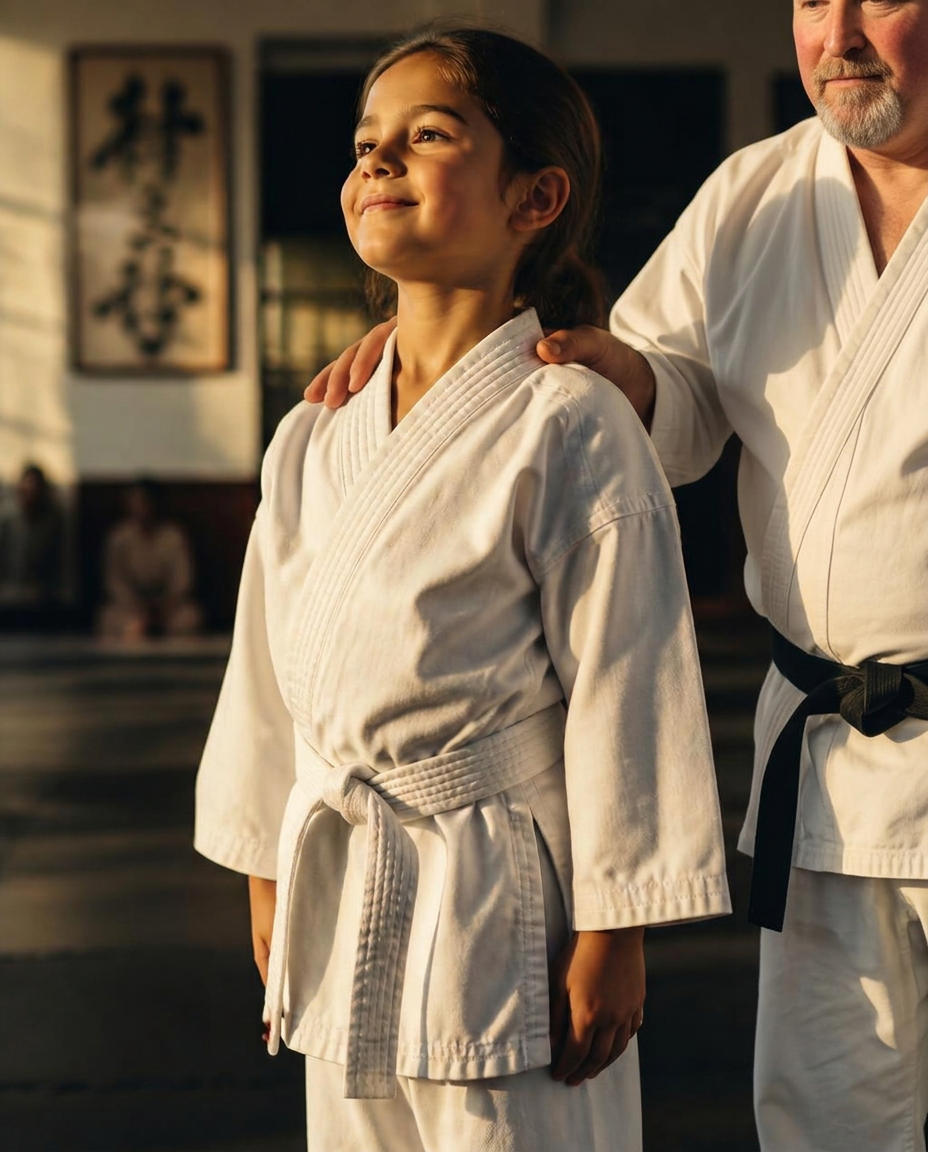
Intro Special
Uniform included
2 Weeks of Classes
Basic SKILLZ. Uniform included.
- 2 weeks of Basic SKILLZ classes
- Uniform included ($69 Value)
- Right-fit check before you commit
- Sit and watch every class
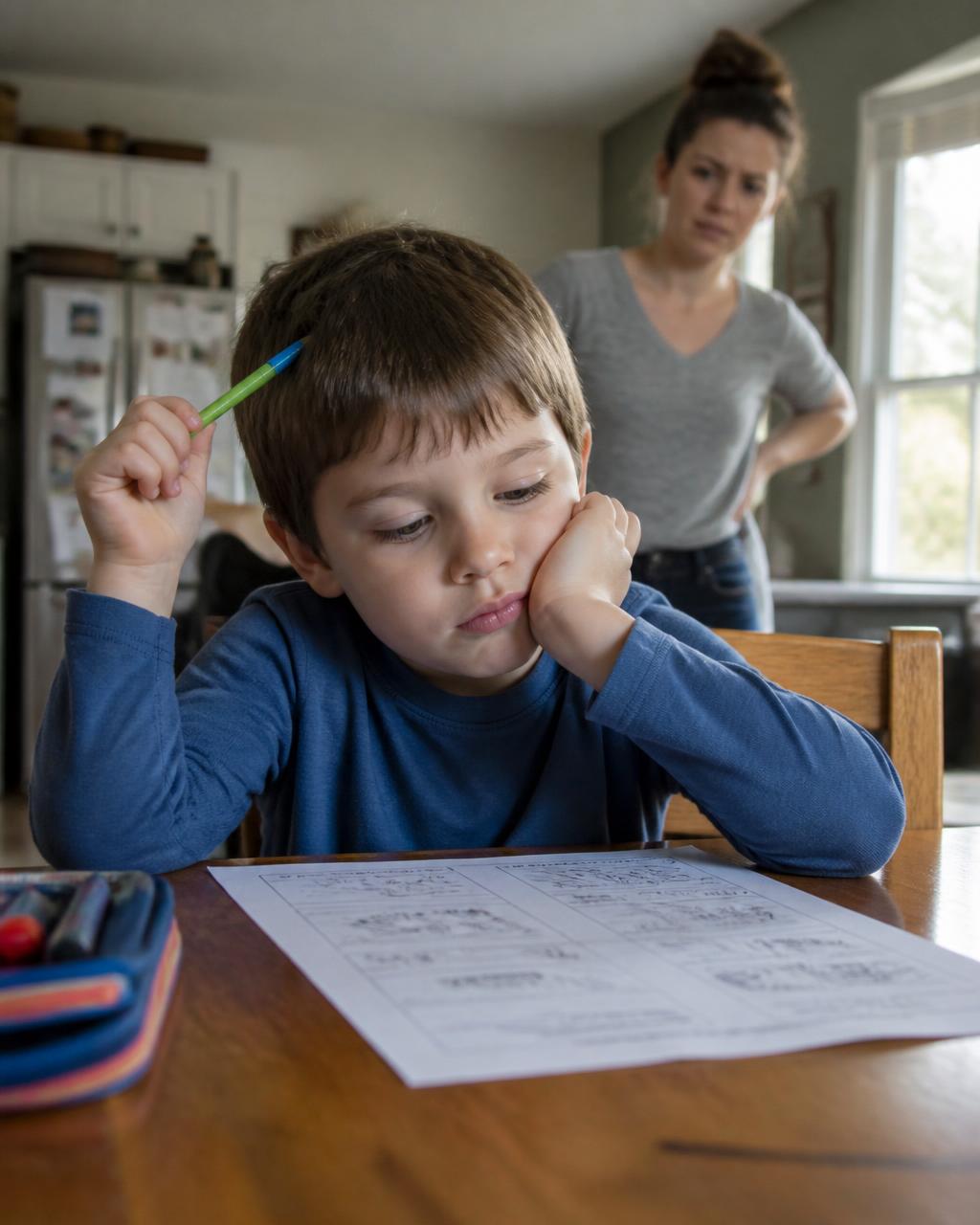
Sound familiar?
The report card says 'has trouble focusing.'
- They know the rule and break it anyway, ten seconds later
- Homework takes an hour because they're up every four minutes
- They give up the moment something takes a second try
- They talk over the teacher — and over you
What parents notice instead:
- They hold eye contact and wait for the whole instruction
- They finish a task before they leave the chair
- They try the hard thing again instead of quitting
- Their teacher mentions it before you do
60 sec
of sustained, single-target focus — the drill benchmark this level is built to reach
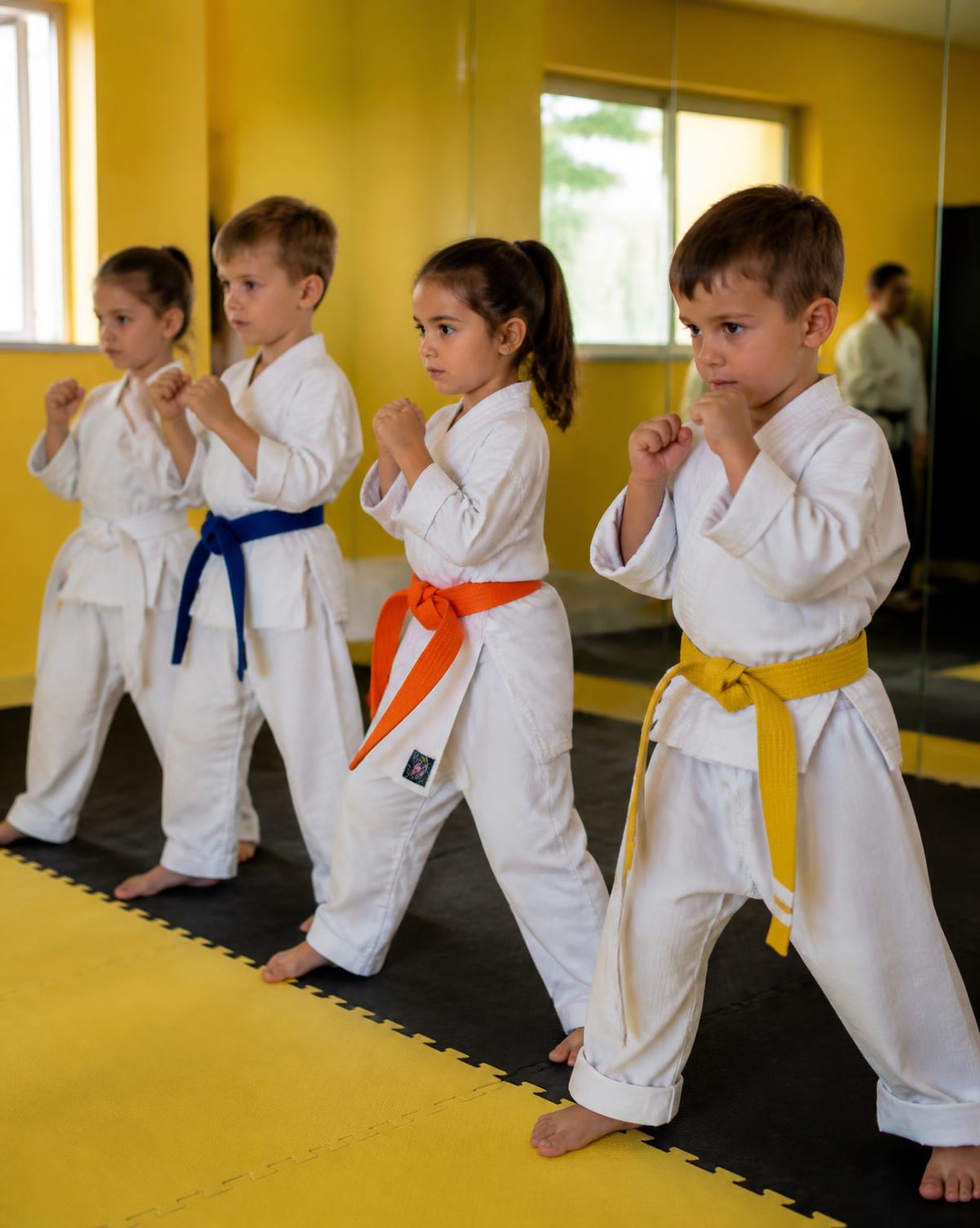
Why ages 5–6 train separately
Five and six-year-olds are the most enthusiastic students in any building, and that's exactly the trap. They follow instructions so willingly that instructors start treating them like eight-year-olds. Then they hit a wall, because they still don't have the physical base, and a kid who was thrilled two months ago starts asking to stay home.
Designed for this age
Focus Is A Skill. We Teach It Like One.
At 5 and 6 the brain can finally hold a target, filter noise, and self-correct — but none of that arrives on its own. Basic SKILLZ drills it directly, then attaches a martial arts technique to it so it sticks.
This is the age where the skills stop being purely physical. A five-year-old can now be taught focus as a thing — as a behavior with a name that they can practice and be measured on. That is not true at three.
So the eight skills at this level shift from movements to traits: focus, teamwork, control, memory, balance, discipline, fitness, coordination. Each one gets a class. Each one gets a mat chat where we explain what it is in words a five-year-old actually uses, then two or three games that force them to do it, then a test.
Your child comes home able to tell you what discipline means and what they did to earn the stripe for it. That's the point. The martial arts is the delivery vehicle.
Focus, Drilled Directly
Eye contact, one target, full instruction before movement. It is the same demand a kindergarten teacher makes, rehearsed twice a week.
Self-Control Under Excitement
The hardest thing at this age is stopping. Freeze commands and stance holds train the brake, not just the gas.
Working With A Partner
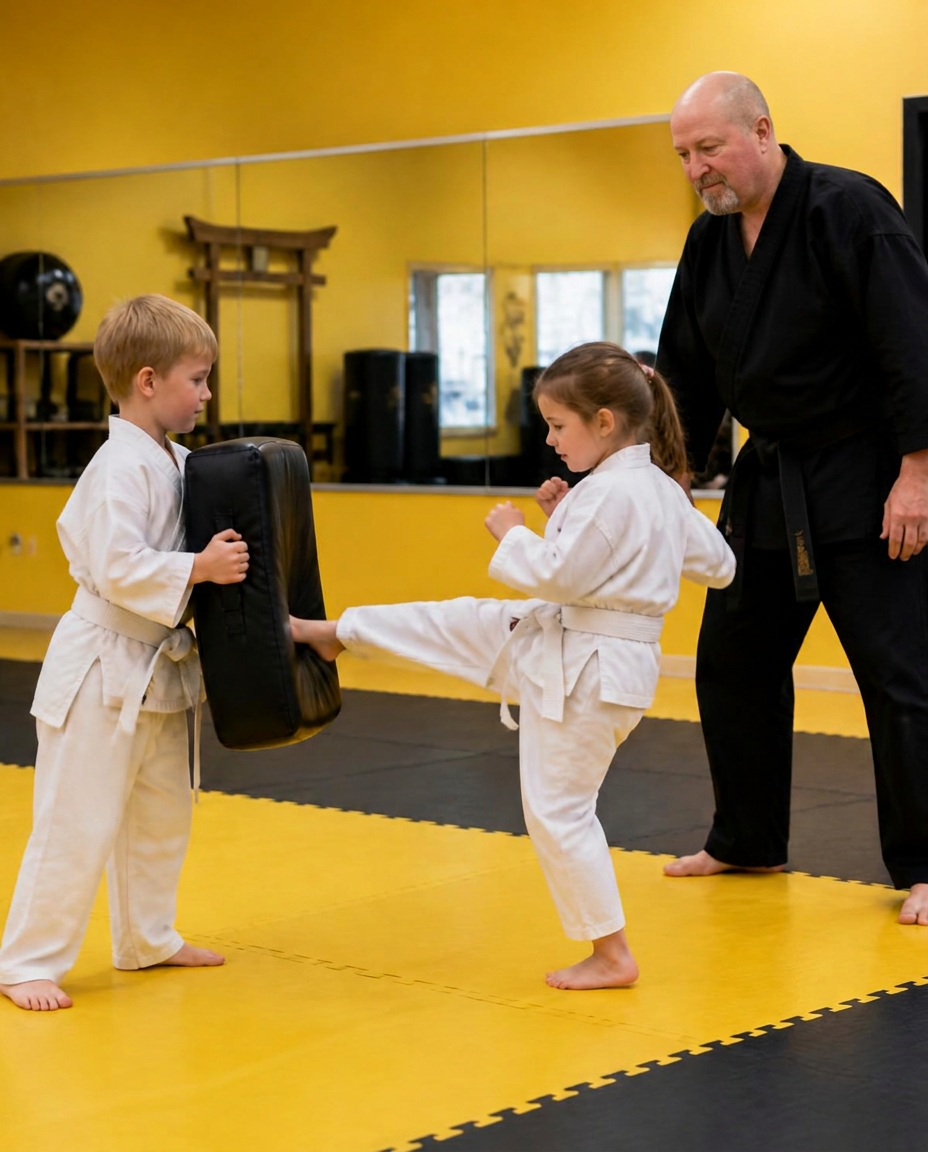
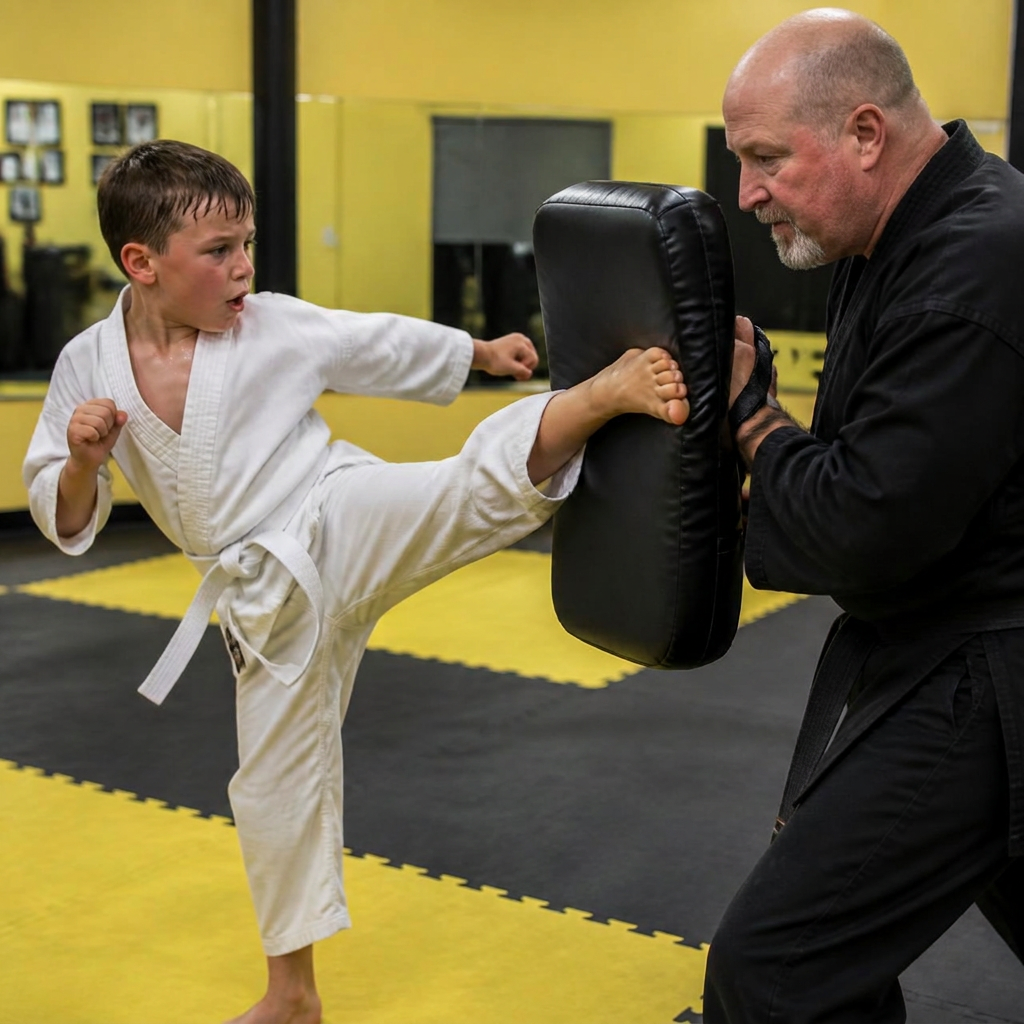
Holding a pad steady for someone else is a patience drill. Kids learn their turn matters because someone is waiting on them.
Coordination That Crosses Over
Cross-body movement, sequencing, and left-right patterning show up later in handwriting and reading fluency.
Real Standards, Kindly Held
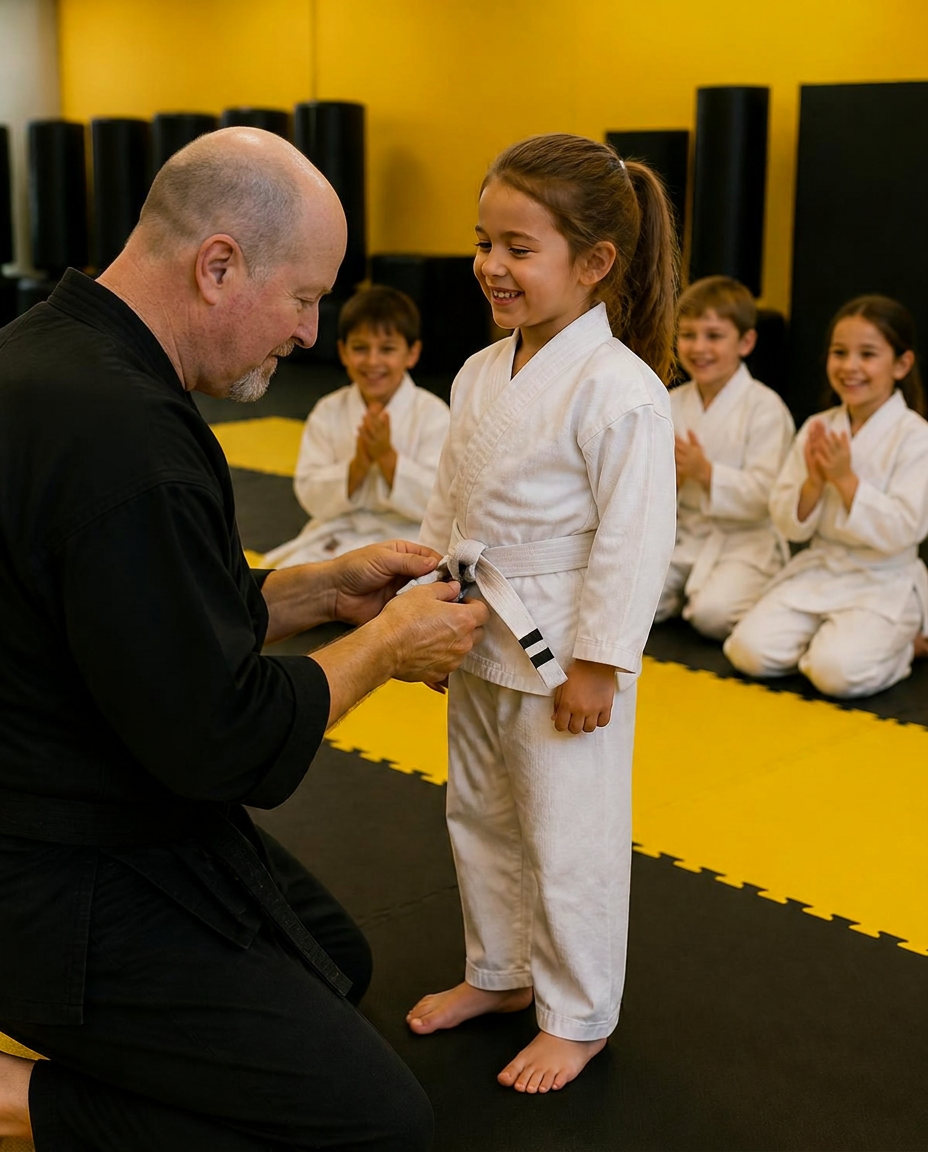
A stripe is earned, not handed out. Kids at this age can tell the difference — and it's why the confidence is real.
Failure With A Soft Landing
They will not pass every stripe on the first try. Learning that's survivable is half the point.
Where ages 5–6 actually are
What we expect. What we're building toward.
No instructor at Pride is surprised by any of this. It is written into the curriculum before your child walks in the door.
Physical
- Normal at this age
- The leg, arm, core, and abdominal foundation exists now, but strength is still thin.
- What week one looks like
- Struggling past five repetitions. Form falling apart as fatigue arrives.
- Our goal
- Ten-plus clean reps, and holding technique when they're tired.
Intellectual
- Normal at this age
- Real problem-solving is online. They love figuring things out and will invent their own solutions.
- What week one looks like
- Getting tangled on multi-step combinations that mix left and right.
- Our goal
- Retaining longer sequences and executing left/right combinations without stopping to think.
Emotional
- Normal at this age
- Big feelings, and the brakes are still developing.
- What week one looks like
- Losing focus and shutting down when they aren't happy. Losing control of their power when excited.
- Our goal
- Focusing when it's hard, and controlling their body and their force on purpose.
Social
- Normal at this age
- They love to play with others and are ferociously competitive about it.
- What week one looks like
- Weak sportsmanship — bragging on a win, sulking on a loss, bending the rules.
- Our goal
- Don't cheat, don't get angry when you lose, don't brag when you win.
The curriculum
The eight Basic skills
One per class, in this order. Your child earns a stripe for each. All eight, and they test for their next belt.
- 01
Focus
Holding attention on one target while things move around them — the skill their kindergarten teacher will notice first.
- 02
Teamwork
Drills that only work if a partner succeeds too. Losing gracefully is graded.
- 03
Control
Hitting hard on command and hitting light on command. Power with a dial, not a switch.
- 04
Memory
Retaining and reproducing a sequence — the direct feed into reading and math retention.
- 05
Balance
Holding a position on one leg, still, while being asked to do something else with their arms.
- 06
Discipline
Doing the thing correctly when nobody is watching and it stopped being fun.
- 07
Fitness
Building the base — pushups, jumps, holds — so the technique has an engine behind it.
- 08
Coordination
Arms and legs doing two different jobs at the same time without either one collapsing.
What a stripe test looks like
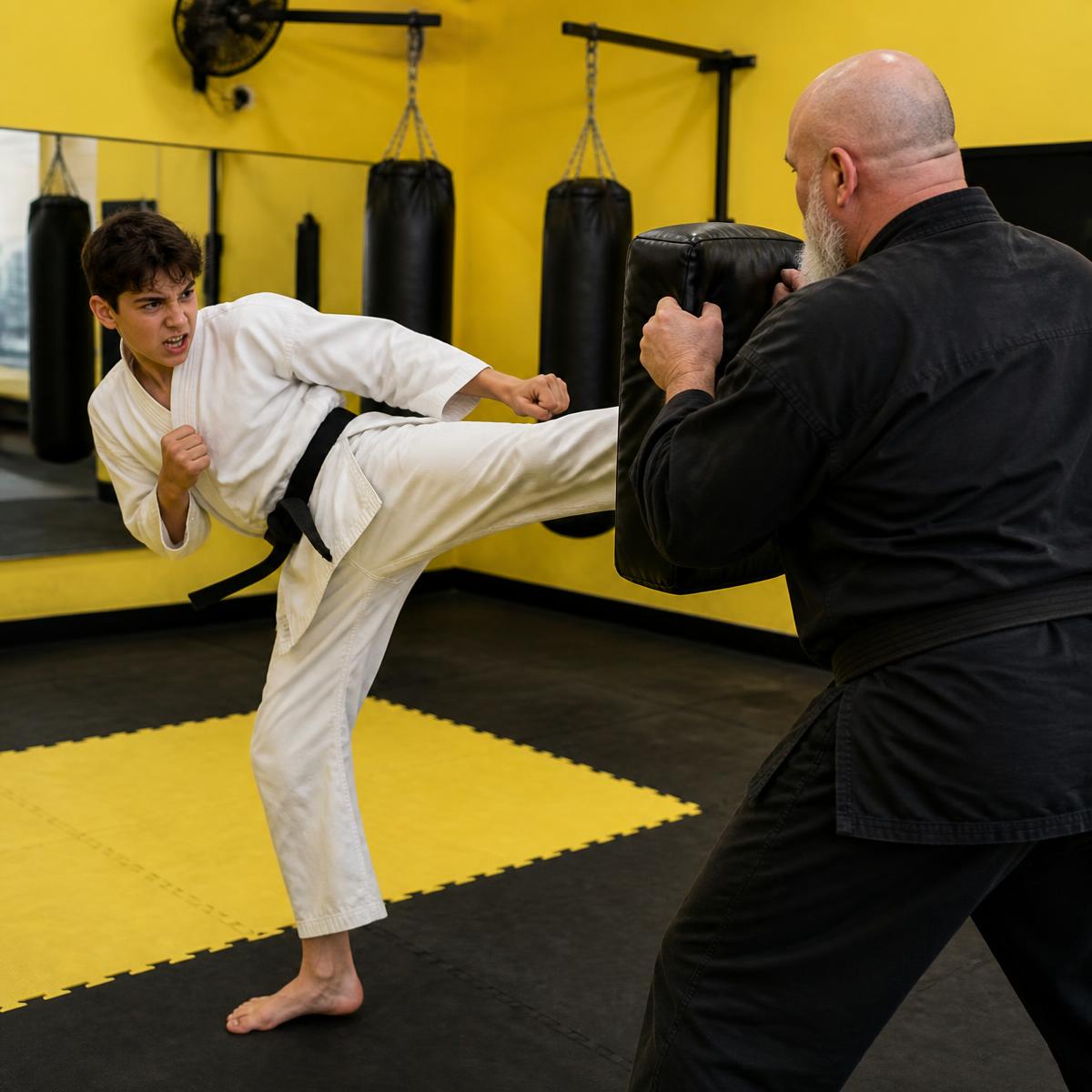
For the focus stripe, a white belt punches and kicks a pad that an instructor throws at them from one step off their side — so the target moves and arrives unannounced. They have to find it, hit it, and reset.
30–40 minutes, four parts
Warm-up
Bodies moving and blood flowing before anything technical is asked of them. Short, loud, and physical on purpose.
Mat chat
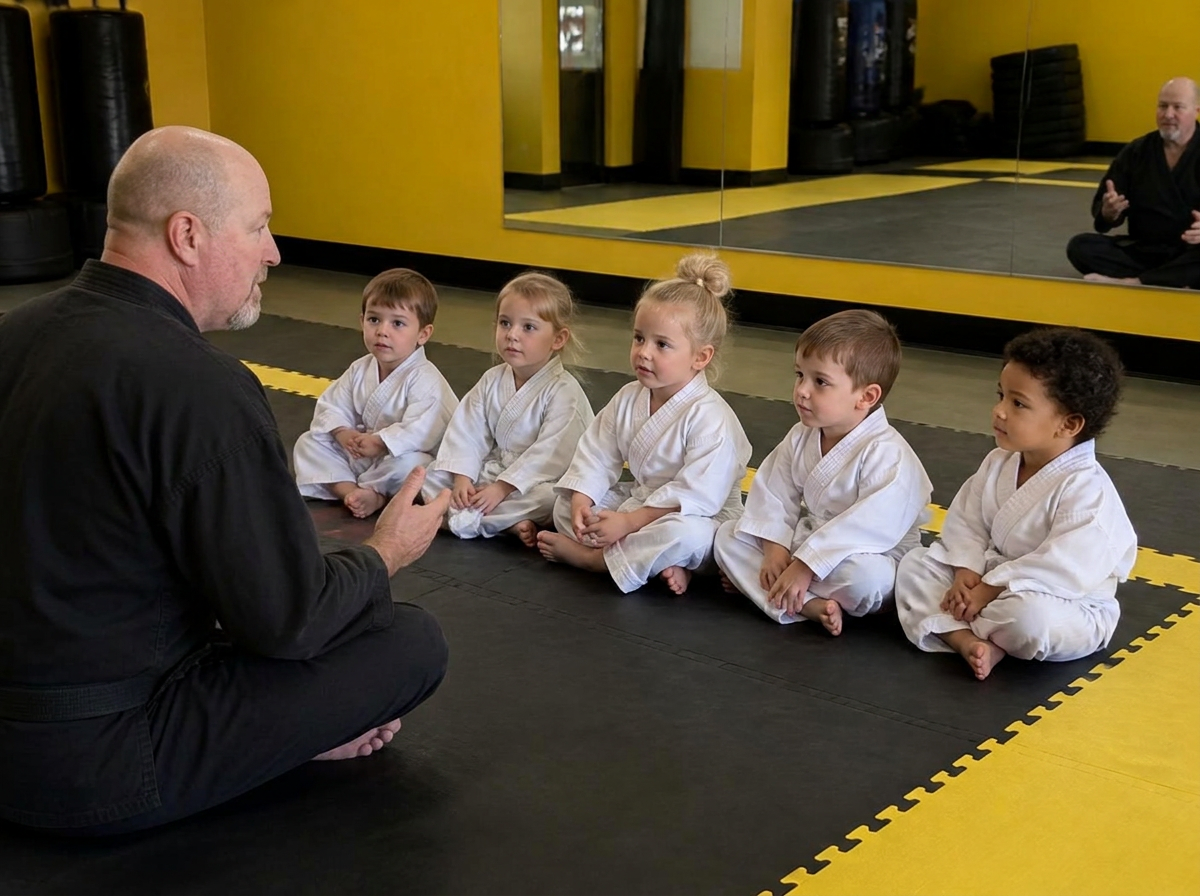
Everyone sits down and the instructor explains today's one skill — what it is, where it shows up outside the building, and what earning it will take. Two or three minutes. This is the part most schools skip and it is the part that makes the skill stick.
Skill-building drills
Two or three games engineered so that the only way to win the game is to perform the skill. Kids think they're playing. They are being drilled.
The test
Each student demonstrates the skill individually. Meet the standard and the stripe goes on the belt that day. Miss it and they try again next cycle — nothing is handed out.
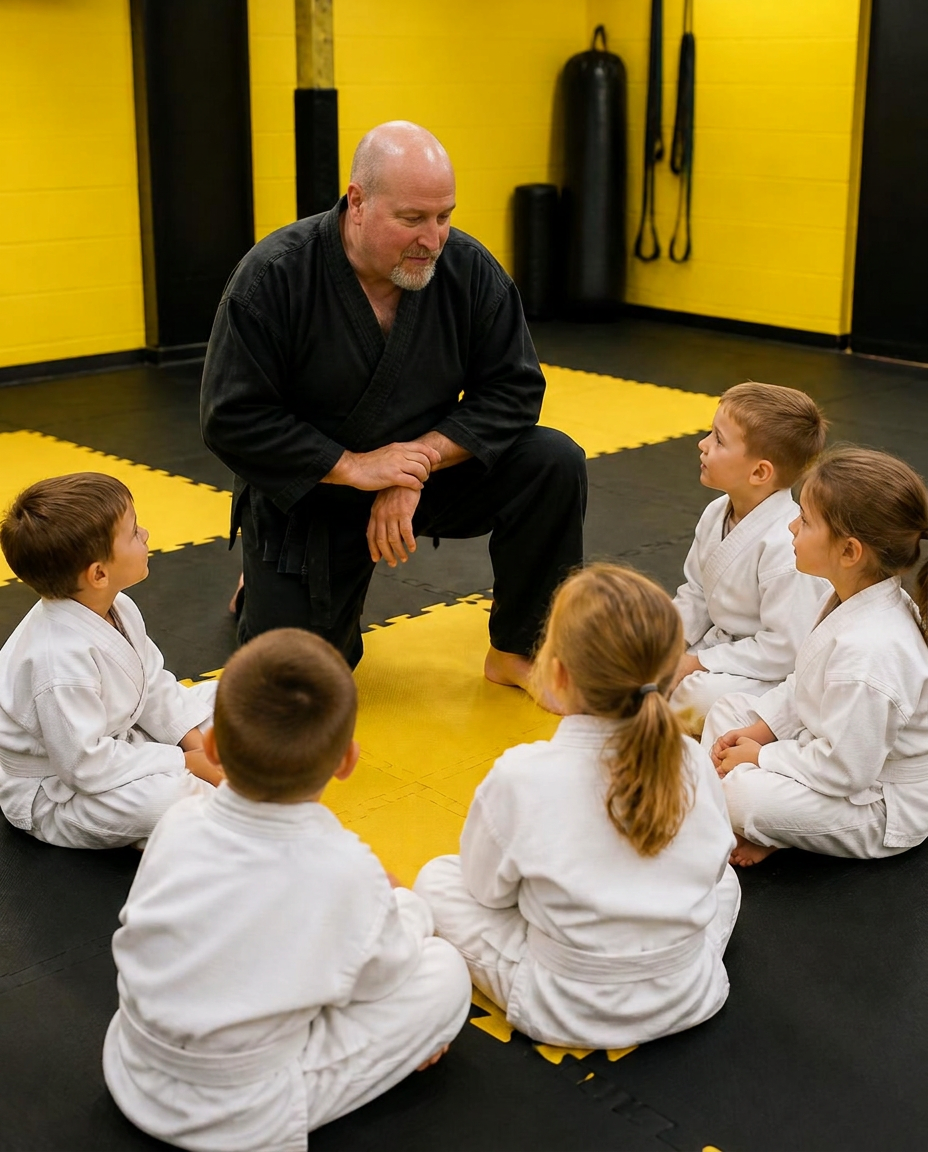
Age 5–6 Only
no mixed 5-to-10 room where half the class is lost
Within the first few weeks
What parents notice first
They wait for the whole sentence before they move
'One more time' stops being a fight
They tie their own belt — and then their own shoes
They stand taller when someone new talks to them
They Stop Looking At You For The Answer.
The first time your child is corrected on the mat, fixes it, and doesn't glance at you for reassurance — that is the whole program in one moment.
Correction Without Collapse
Kids learn that being fixed isn't being failed. That single reframe changes how they handle school.
Their Own Win, Not Yours
You didn't help. You couldn't. They earned the stripe on their own and they know it.
Carried Home Same Day
Expect to be shown the technique in the kitchen, twice, before dinner.
How the level is built
8
focus and control skills per belt, one per class
2×
classes a week is the pace most families run
9
belts before they move up to Core SKILLZ
Finish all nine belts and your child moves up to Core SKILLZ (Ages 7–9) — where eight new skills start against a harder standard.
Focus Is Learnable.
Start This Week.
Intro Special
Uniform included
2 Weeks of Classes
Basic SKILLZ. Uniform included.
- 2 weeks of Basic SKILLZ classes
- Uniform included ($69 Value)
- Right-fit check before you commit
- Sit and watch every class
Common questions
Ages 5–6 questions
Focus Is Learnable.
Start This Week.
Two weeks of Basic SKILLZ classes with uniform included. Watch every class from the seats and judge it for yourself.