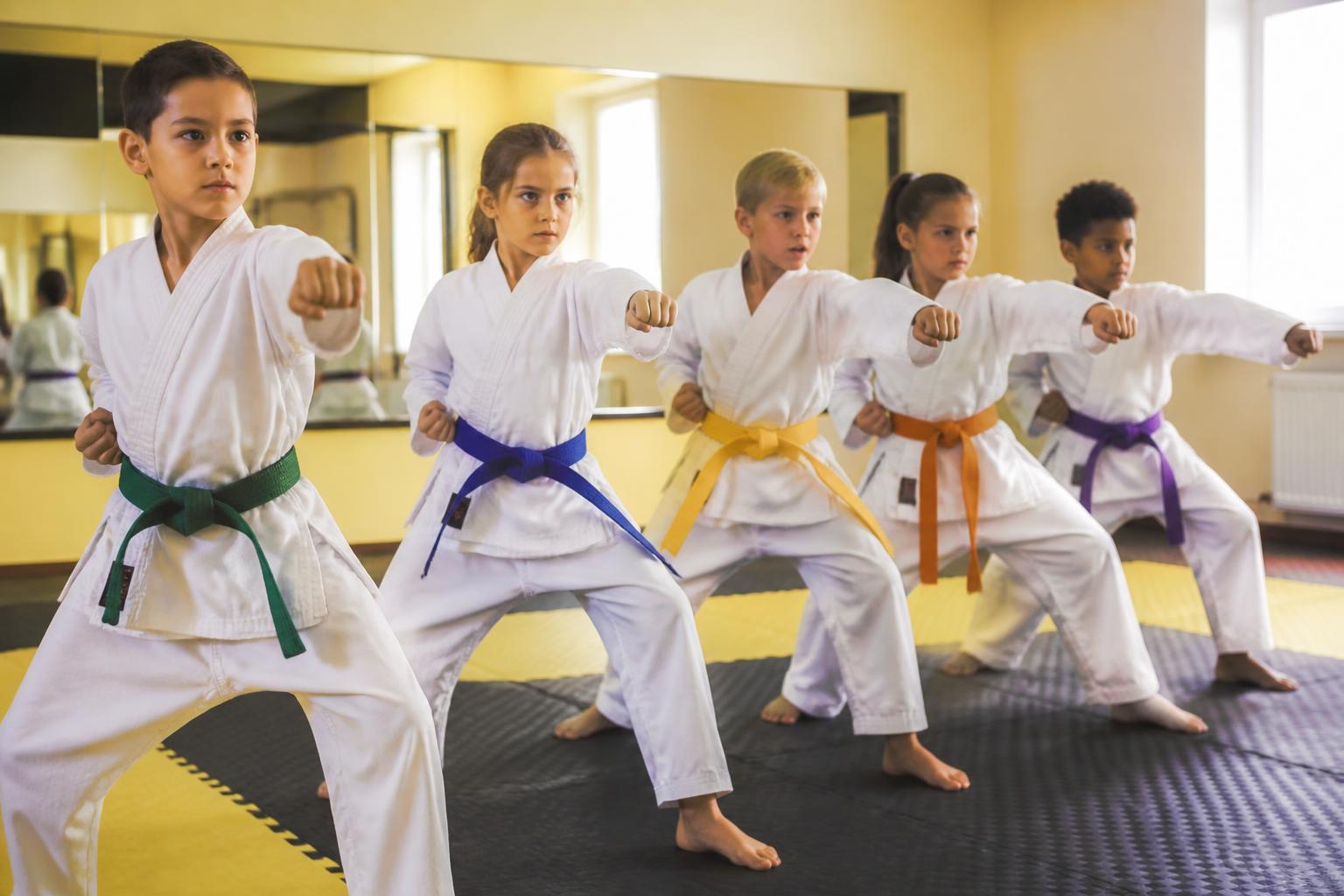
The Age TheyDecide WhatThey're Made Of.
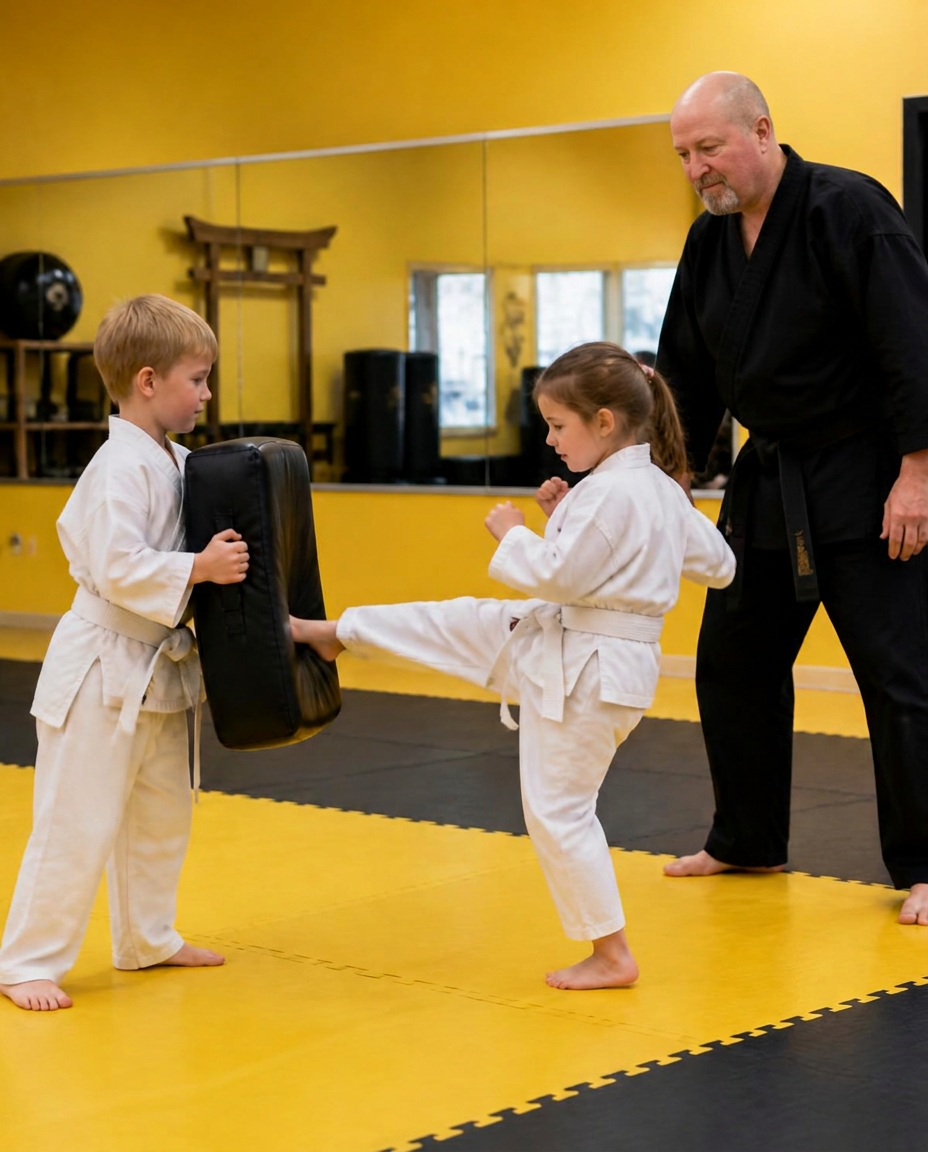
Ages 7 to 9 start comparing themselves to everyone in the room. Core SKILLZ makes sure the comparison lands somewhere useful — real technique, earned rank, and a standard they can actually meet.
Intro Special
Uniform included
2 Weeks of Classes
Core SKILLZ. Uniform included.
- 2 weeks of Core SKILLZ classes
- Uniform included ($69 Value)
- Right-fit check before you commit
- Sit and watch every class
Sound familiar?
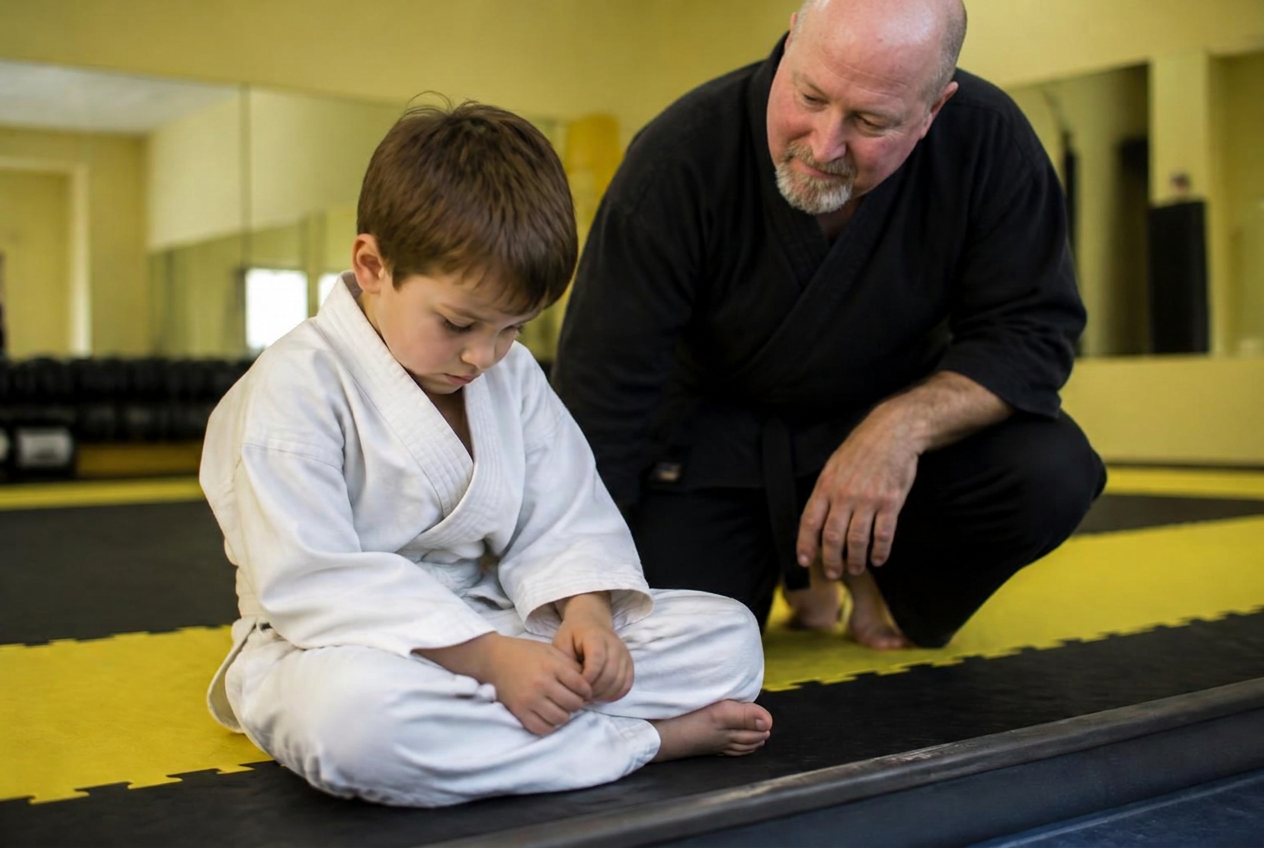
They quit right before they'd have gotten good.
- They start strong, then bail when it stops being easy
- They compare themselves to the best kid and shut down
- 'I'm bad at it' comes out after one failed attempt
- Sports where they sit on the bench made it worse
What parents notice instead:
- They stay in the drill after the first miss
- They measure against last month's version of themselves
- They ask to be corrected instead of hiding the mistake
- They finish what they signed up for
72
stripes between white belt and the top of this level — every one of them earned in front of the class
Why ages 7–9 train separately
Seven to nine is the sweet spot. Vocabulary and problem-solving are strong, but they still want an adult they respect in the room — so the instructor's word actually carries. It is the window where the teacher-student relationship does the most work it will ever do. Waste it in a class built for ten-year-olds and they spend a year at the back of the line.
Designed for this age
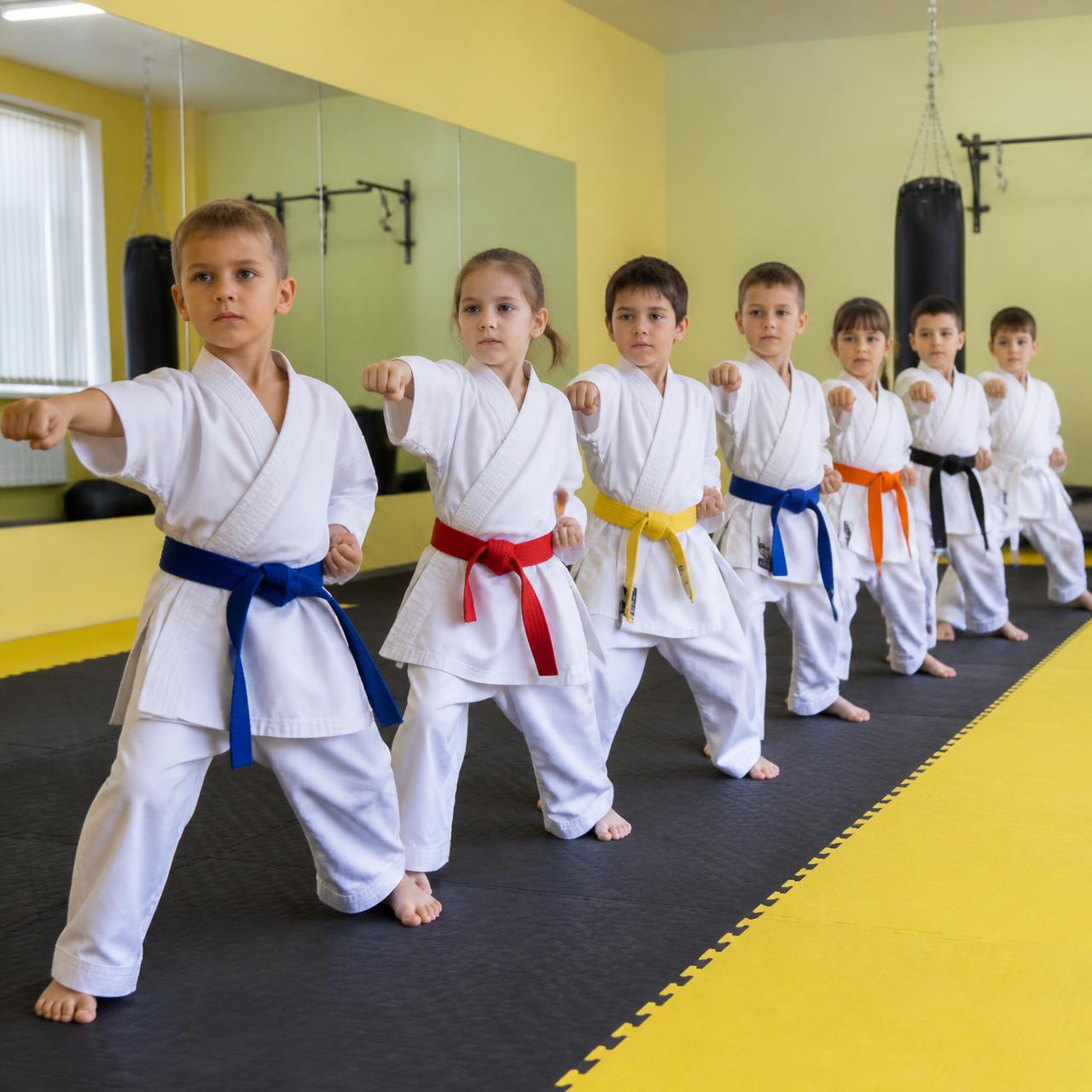
Real Technique. Real Standard. Real Confidence.
This is the first age that can hold a complex sequence, self-correct mid-movement, and understand why a technique works. Give them a soft standard here and they'll assume everything they earn is fake.
By seven, a child can handle real technical instruction and real physical demand. What they still lack is the athletic base to train with the ten-and-up group — and putting them there early is how kids decide they're 'not good at sports.'
The eight Core skills are the athletic and mental toolkit: agility, technique, courage, flexibility, intensity, perseverance, speed, concentration. Half are physical, half are the stuff that makes the physical stick.
Courage and perseverance get their own class and their own stripe here, deliberately. This is the age where a kid first meets something they can't do on the first try. How they handle that moment sets a pattern that outlasts anything they'll learn about kicking.
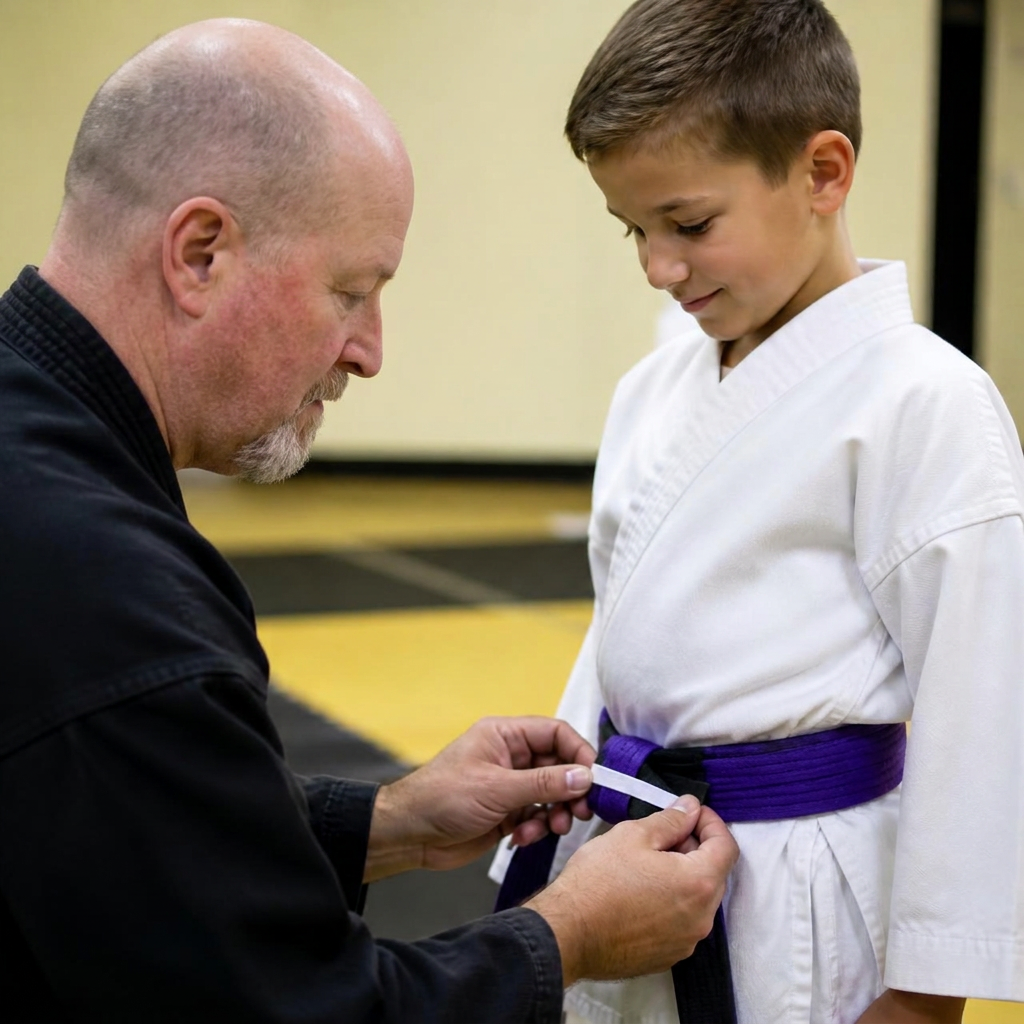
Earned Rank, Not Attendance Rank
Stripes are tested. Kids at this age smell participation trophies from across the room, and they discount the confidence that comes with them.
Self-Defense That Starts With Awareness
Distance, voice, and exit come before any physical response. The physical skill exists — it's simply the last option.
Self-Correction
They learn to watch their own mistake and fix it without an adult narrating. That's the skill that makes a good student in any subject.
Peer Pressure, Pointed The Right Way
A room of kids working hard is the strongest behavioral tool we have. It beats anything an adult can say.
Persistence Under Frustration
Techniques at this level take weeks. Kids find out that 'hard for now' is not the same as 'not for me.'
Something That's Theirs
Not your sport, not the school's team. Their belt, their record, their pace.
Where ages 7–9 actually are
What we expect. What we're building toward.
No instructor at Pride is surprised by any of this. It is written into the curriculum before your child walks in the door.
Physical
- Normal at this age
- Real coordination and real power are arriving, but the athletic base is still forming.
- What week one looks like
- Enthusiasm outrunning technique. Speed at the cost of form.
- Our goal
- Athletic movement that holds its shape at full speed.
Intellectual
- Normal at this age
- Proficient vocabulary and genuine problem-solving. They ask good questions.
- What week one looks like
- Wanting to understand why before they'll fully commit to a drill.
- Our goal
- Self-correcting — spotting their own error before the instructor names it.
Emotional
- Normal at this age
- Still adventurous and youthful, still open to adult guidance.
- What week one looks like
- Frustration and quitting the first time a skill doesn't come quickly.
- Our goal
- Staying in it after the first failure. That is the whole ballgame at this age.
Social
- Normal at this age
- The teacher-student bond is stronger than it will ever be again.
- What week one looks like
- Strong peer comparison — measuring themselves against the kid next to them.
- Our goal
- Competing against their own last attempt instead of their classmate's.
The curriculum
The eight Core skills
One per class, in this order. Your child earns a stripe for each. All eight, and they test for their next belt.
- 01
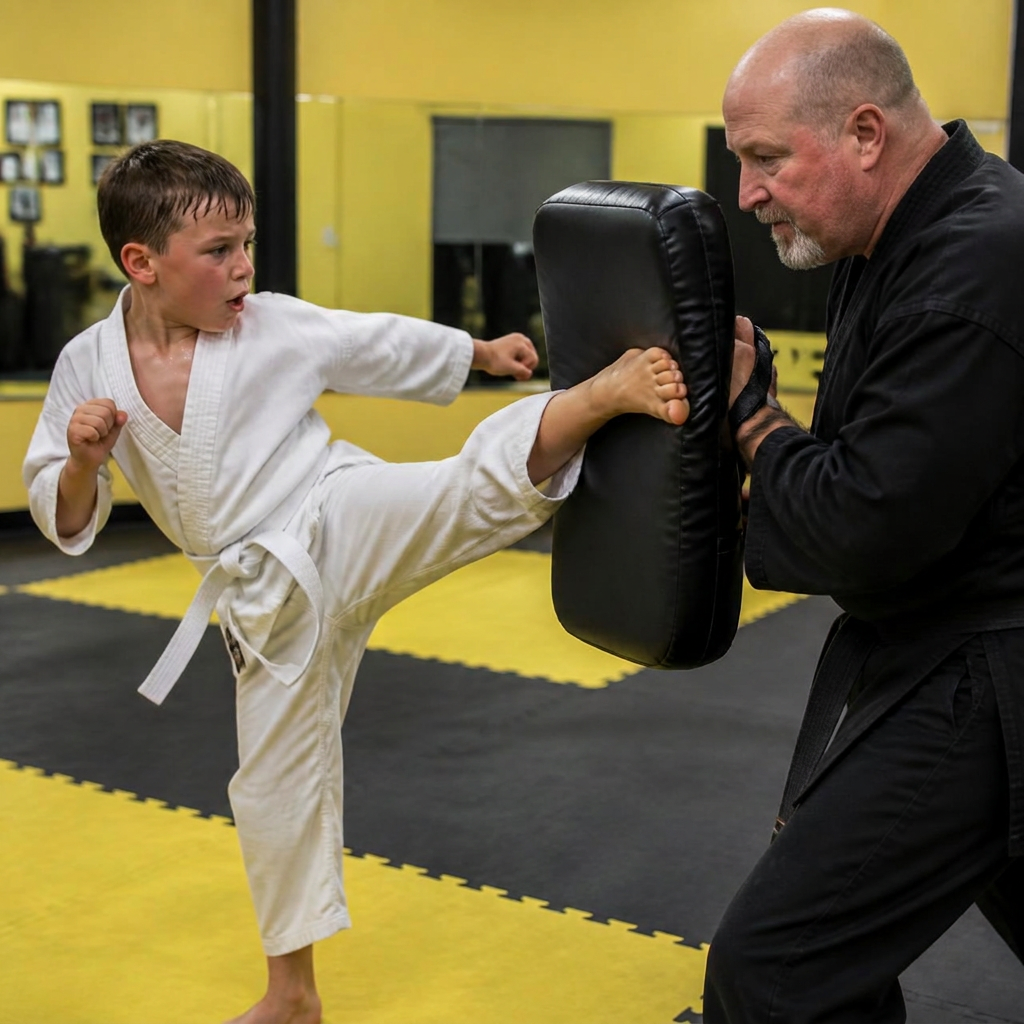
Agility
Changing direction fast without losing balance or position.
- 02
Technique
The correct mechanic, held under fatigue and under speed.
- 03
Courage
Attempting the thing that looks scary — a break, a spar, a new height — on purpose.
- 04
Flexibility
Range of motion built deliberately, which is also the single biggest injury reducer at this age.
- 05
Intensity
Learning to actually go hard. Many kids have genuinely never done this.
- 06
Perseverance
Continuing after the failed rep. Graded on the attempt after the miss, not the miss.
- 07
Speed
Reducing the gap between decision and movement.
- 08
Concentration
Sustained attention across a long sequence, with distraction deliberately added.
What a stripe test looks like
For the perseverance stripe, a student is given a target they will miss the first several times — and the stripe is awarded on how they run attempts four through ten, not on whether they eventually hit it.
45 minutes, four parts
Warm-up
Bodies moving and blood flowing before anything technical is asked of them. Short, loud, and physical on purpose.
Mat chat
Everyone sits down and the instructor explains today's one skill — what it is, where it shows up outside the building, and what earning it will take. Two or three minutes. This is the part most schools skip and it is the part that makes the skill stick.
Skill-building drills
Two or three games engineered so that the only way to win the game is to perform the skill. Kids think they're playing. They are being drilled.
The test
Each student demonstrates the skill individually. Meet the standard and the stripe goes on the belt that day. Miss it and they try again next cycle — nothing is handed out.
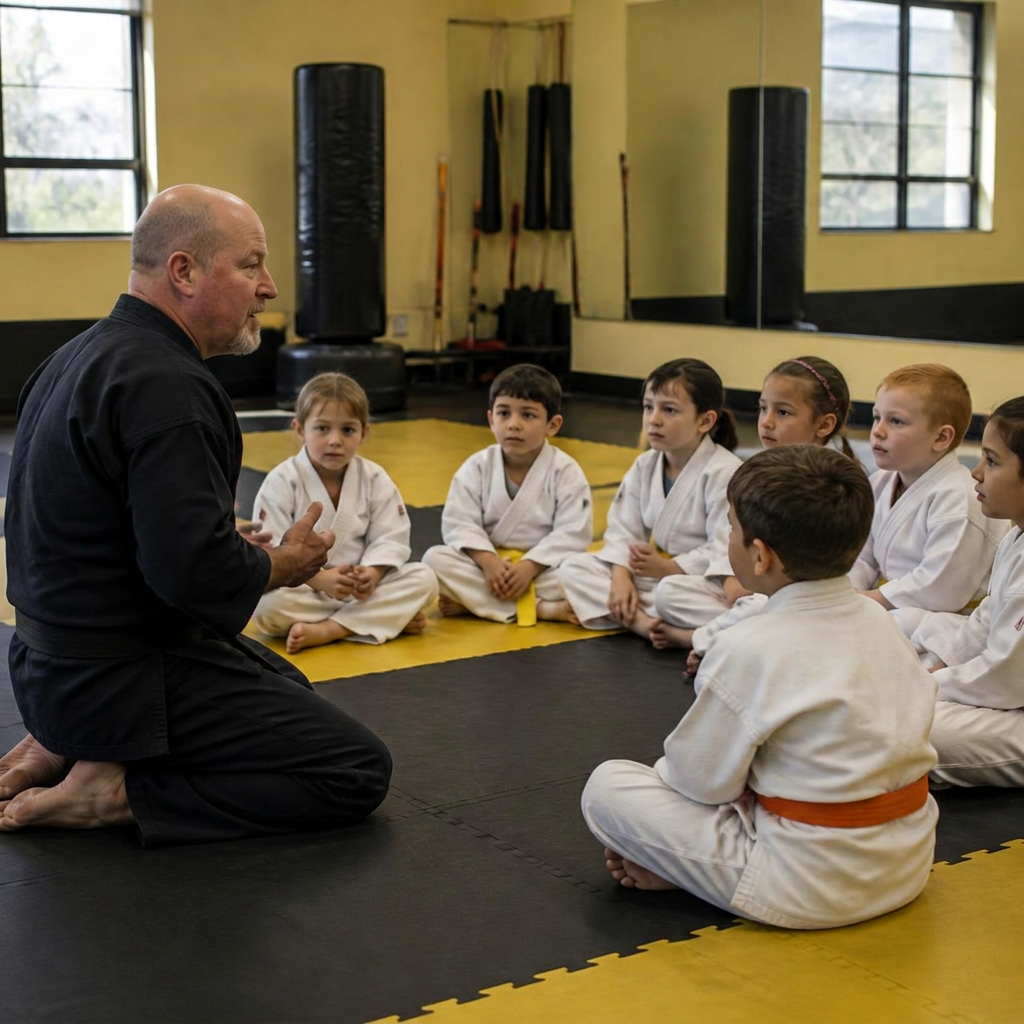
Age 7–9 Only
grouped tight so the standard fits every kid on the mat
Within the first few weeks
What parents notice first
They keep going after the first mistake
Chores stop needing a third reminder
They stand up straighter walking into a room of strangers
They start talking about the next belt, not the next class
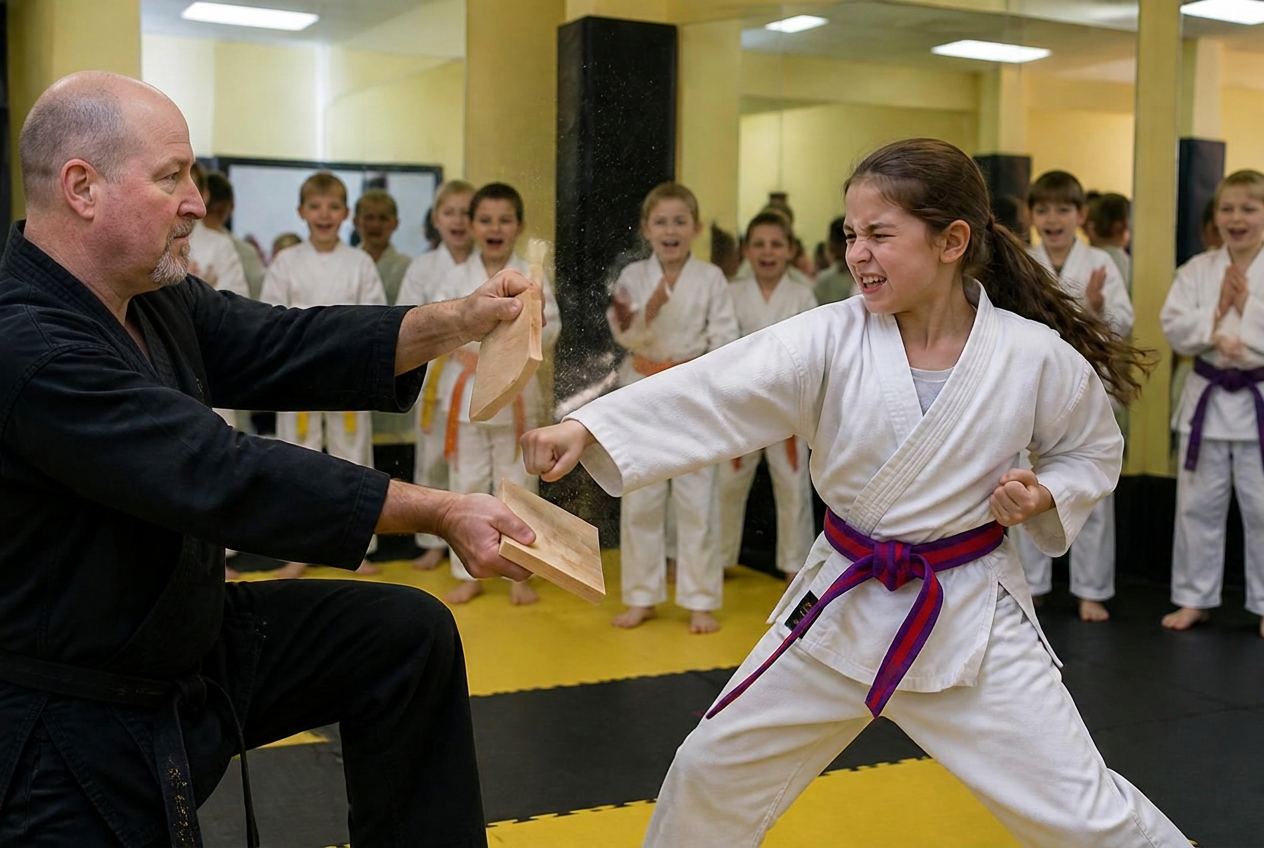
The Board Breaks And Something Else Does Too.
Every kid at this age carries a private list of things they've decided they can't do. Breaking through one of them in front of a cheering room takes an item off that list permanently.
Proof They Can't Argue With
You can tell a nine-year-old they're capable. Showing them is a different category of evidence.
The Room Is On Their Side
Kids cheer for each other here, and being cheered for by peers is worth more than praise from adults.
It Follows Them Out The Door
The kid who breaks a board on Tuesday raises a hand in class on Wednesday. Parents report it constantly.
How the level is built
8
skills per belt, tested one at a time
9
belts inside Core SKILLZ
45
minutes per class, four structured parts
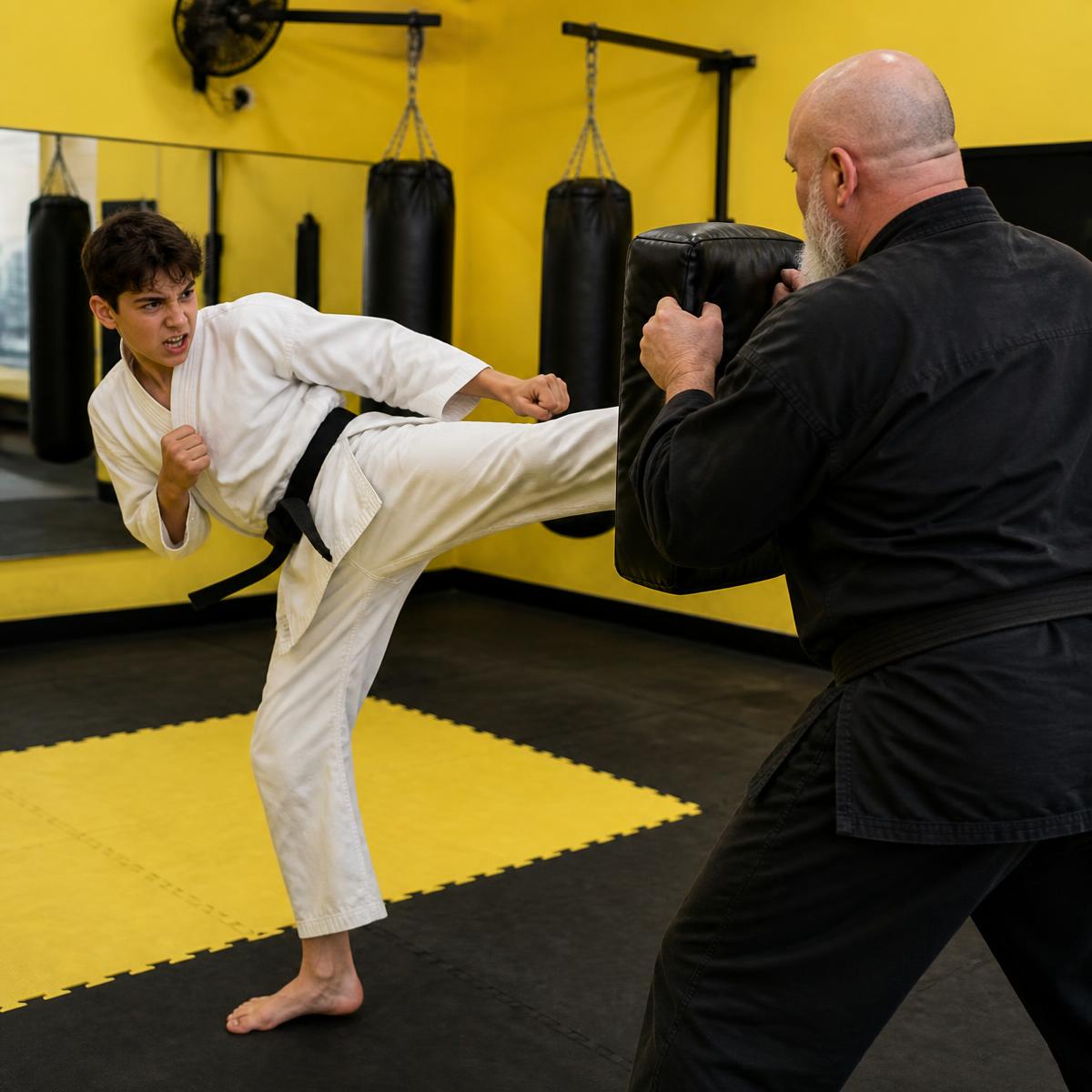
Finish all nine belts and your child moves up to Extreme SKILLZ (Ages 10–14) — where eight new skills start against a harder standard.
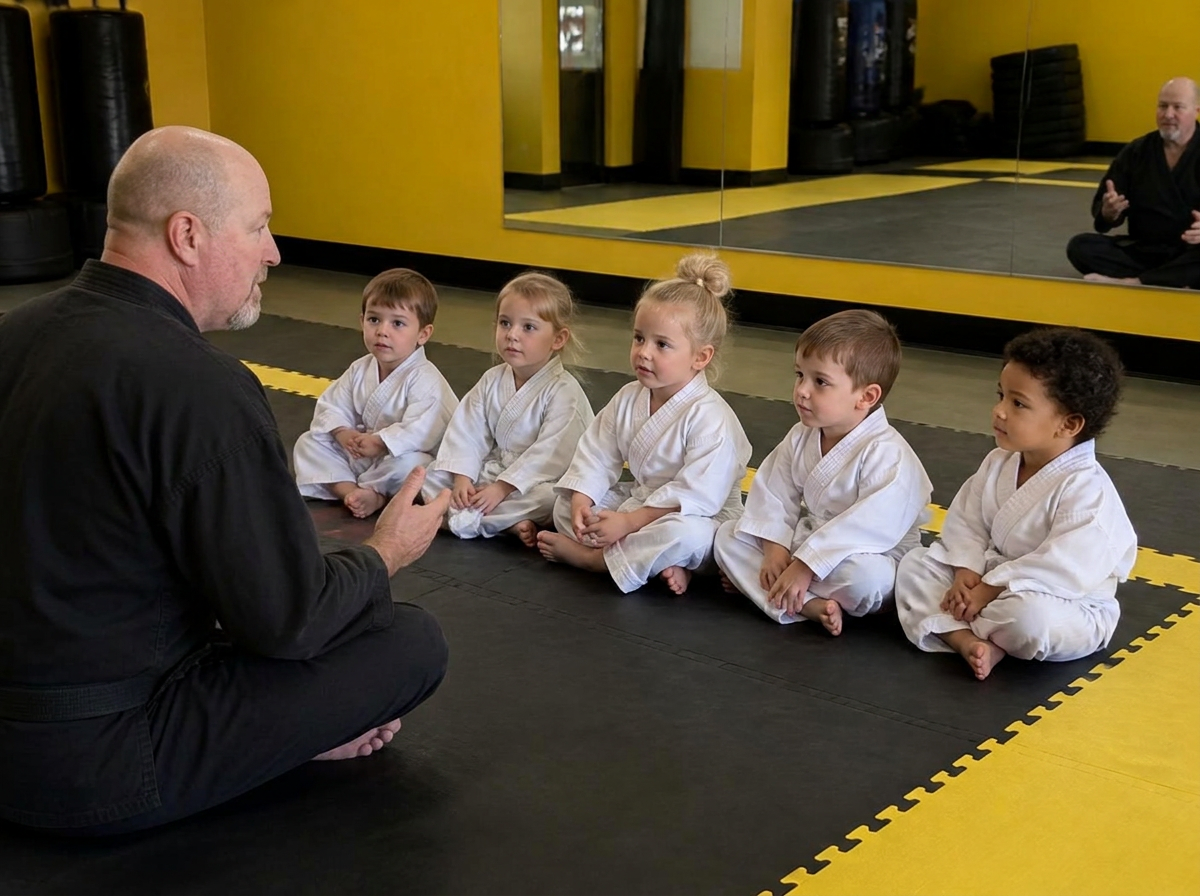
Give Them Something
Hard To Finish.
Intro Special
Uniform included
2 Weeks of Classes
Core SKILLZ. Uniform included.
- 2 weeks of Core SKILLZ classes
- Uniform included ($69 Value)
- Right-fit check before you commit
- Sit and watch every class
Common questions
Ages 7–9 questions
Give Them Something
Hard To Finish.
Two weeks of classes, uniform included. Watch every session and decide for yourself whether the standard is real.